9 Easy Ways to Stop Using Phone at Night and Sleep Better
Published: 25 Aug 2026
It’s easy to get lost in your phone before bed, whether it’s scrolling through social media, playing games, or checking emails. But did you know that this habit is impacting your sleep quality more than you think? Late-night phone use blocks melatonin production, making it harder to fall asleep and reducing the quality of your rest.
But don’t worry—I’m here to help! In this article, I’ll show you practical tips that I’ve personally tried to help you stop using your phone at night. Plus, I’ll share alternative methods to use before bed. So, let’s dive in
Why Should You Stop Using Your Phone at Night?
Before making changes to your nighttime phone habits, it’s important to understand why it’s necessary.
- Blue Light Disruption: Phones emit blue light, which interferes with the production of melatonin, a hormone that helps control your sleep cycle. When melatonin levels are reduced, it becomes harder to fall asleep, and your sleep quality is negatively affected.
- Increased Stress: Checking emails or scrolling through social media can elevate stress and anxiety. Negative interactions or the constant need to stay updated can keep your mind racing, preventing you from relaxing before sleep.
- Disrupted Sleep Cycle: Late-night phone use can disrupt your sleep-wake cycle, making it harder to wake up refreshed and affecting your overall energy the next day.
How to Stop Using Phone Before Bed: 9 Practical Tips
Breaking the habit of using your phone before bed may take some time, but a few simple changes can make it much easier. Here are nine practical ways to reduce nighttime phone use:
- Set a Phone Time Limit Before Bed
- Use the “Do Not Disturb” Mode
- Charge Your Phone Outside the Bedroom
- Turn Off Unnecessary Notifications
- Use a Night Mode Filter
- Limit Social Media Use
- Use Screen Time Limits
- Establish a Relaxing Bedtime Routine
- Try Digital Detox Apps
Now, let’s discuss each of these tips in detail.
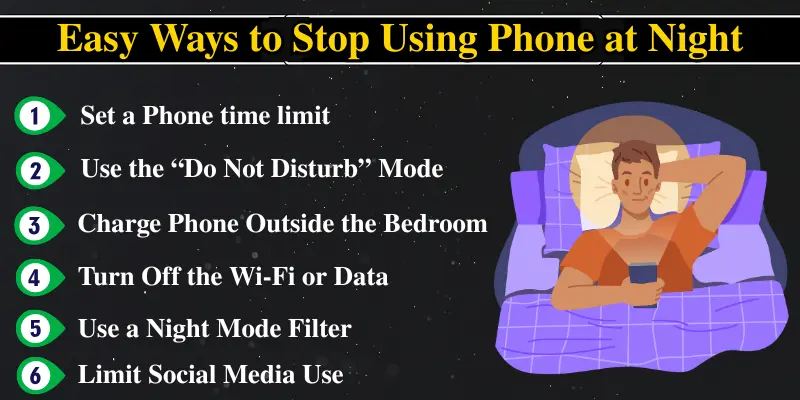
1. Set a Phone time limit
Choose a specific time to stop using your phone each night, ideally 30 to 60 minutes before bedtime. Treat this time as a simple phone curfew and avoid scrolling, gaming, watching videos, or checking social media.
For example, if you usually go to bed at 11:00 PM, try putting your phone away around 10:00 or 10:30 PM. A consistent cutoff can make it easier to build a regular bedtime habit.
If stopping suddenly feels difficult, start with 15 minutes and gradually increase the phone-free period.
2. Use the “Do Not Disturb” Mode
Activate the “Do Not Disturb” mode on your phone in the evening, especially the hour before bed. This will stop calls, texts, or notifications from disturbing you. You can even set it to allow only calls from important contacts, ensuring peace without interruptions.
3. Charge Your Phone Outside the Bedroom
To stop yourself from using your phone at night, try charging it in another room or far from your bed. Charging it away from you makes it harder to grab, so you’re less likely to wake up and use it, which helps protect your sleep.
4. Turn Off the Wi-Fi or Data
Before going to bed, switch off your phone’s internet access (Wi-Fi and mobile data). This simple step stops you from checking social media, emails, or phone updates, helping you avoid unnecessary distractions before sleep.
5. Use a Night Mode Filter
Most modern smartphones come with a Night Mode feature, which reduces the blue light emitted by the screen. Since blue light interferes with melatonin production, using this feature in the evening can help your body naturally prepare for sleep and improve your sleep quality.
6. Limit Social Media Use
Set specific time limits for your social media usage during the day. Excessive use of social media at night can increase anxiety, keeping your mind active and preventing relaxation. Setting boundaries around how much time you spend on these platforms helps reduce their impact on your bedtime.
7. Set a Screen-Time Limit
Most modern smartphones include built-in tools that help you monitor and control how much time you spend on different apps. On Android phones, Digital Wellbeing can help you set app timers, while iPhones offer Screen Time and Focus features.
Set limits for apps that usually keep you awake, such as social media, video platforms, or games. These limits can remind you when you have reached your planned usage and help you reduce late-night browsing.

8. Establish a Relaxing Bedtime Routine
Creating a consistent bedtime routine signals your body that it’s time to wind down. Engage in relaxing activities such as light stretching, listening to soothing music, or writing. Avoid any stimulating activities like watching intense TV shows or working on your laptop, which can keep your brain active and delay sleep.
9. Try Digital Detox Apps
There are plenty of digital detox apps designed to help you disconnect from your phone and improve your focus and sleep. Apps like Offtime, Moment, and Freedom block access to distracting apps and websites after a specific time, allowing you to focus on relaxing for a good night’s sleep.
Alternatives to Phone Use Before Bed
If you’ve been used to watching your phone in bed for hours, it can be hard to break the habit. But replacing phone time with healthier alternatives can make a huge difference:
- Read a Book: Reading is a great way to relax and reduce mental stimulation before bed. Choose a story-based book or a fact–based book that interests you, but avoid engaging or intense topics that may keep you awake.
- Practice Meditation: Meditation can help clear your mind and reduce stress, making it easier to fall asleep. Apps like Calm or Headspace provide guided meditation sessions for bedtime.
- Listen to Music or White Noise: Calm music or white noise can help you fall asleep. Try nature sounds, instrumental music, or soft background sounds to create a relaxing atmosphere.
- Journaling: Writing down your thoughts can help release any stress or worry before bedtime. Consider reflecting on your day or writing down what you are grateful for.
Conclusion
Reducing phone use at night is not only beneficial for improving sleep quality but also for reducing stress and anxiety. By following these simple strategies, such as setting a phone curfew, engaging in relaxing activities, and practicing mindfulness, you can improve your overall well-being.
Remember, the key to a healthier relationship with your phone is finding balance. Start small and gradually replace nighttime phone habits with healthier alternatives to enjoy better sleep and a more comfortable night.
Frequently Asked Questions (FAQs)
Here are the answers to some common questions about how to stop using a phone at night :
Experts recommend stopping phone use at least 30 minutes to an hour before bed. This allows your brain to relax and prepare for sleep.
Yes, using your phone before bed can interfere with your sleep. The blue light from the screen reduces melatonin, a hormone that helps you sleep. This makes it harder to fall asleep and affects your overall rest.
It’s best to keep your phone away from your bed. Having it nearby can convince you to check it during the night. Charging it in another room helps you avoid distractions and promotes better sleep.
Start by setting a phone limit to stop using your phone 30-60 minutes before bed. Replace phone time with relaxing activities like reading or meditation. Gradually, these new habits will help break the phone habit at night.
The 3-3-3 rule for sleep is a simple technique to relax your mind and prepare your body for rest. It includes avoiding stimulating activities 3 hours before bed, practicing relaxation or breathing exercises for 3 minutes before sleep, and focusing on 3 positive thoughts to create a calm mindset. This routine can help reduce stress and support better sleep habits.
Avoiding your phone before bed helps your brain relax and prepares your body for natural sleep. It can improve sleep quality, reduce stress, help you fall asleep faster, and increase your energy and focus the next day.
Using your phone at night can interfere with your sleep cycle by keeping your brain active and reducing melatonin production. It may cause difficulty falling asleep, poor sleep quality, eye strain, increased stress, and tiredness during the day.





- Be Respectful
- Stay Relevant
- Stay Positive
- True Feedback
- Encourage Discussion
- Avoid Spamming
- No Fake News
- Don't Copy-Paste
- No Personal Attacks
- Be Respectful
- Stay Relevant
- Stay Positive
- True Feedback
- Encourage Discussion
- Avoid Spamming
- No Fake News
- Don't Copy-Paste
- No Personal Attacks
