Top 10 Types of Mobile Phone Cases and How to Choose One
Published: 1 Oct 2026
A mobile phone case is more than just an accessory. It protects your smartphone from scratches, accidental drops, dust, and everyday damage while also allowing you to personalize its appearance. However, with so many options available, choosing the right case can become confusing.
The most common types of mobile phone cases include slim cases, clear cases, silicone cases, rugged cases, wallet cases, leather cases, waterproof cases, battery cases, and magnetic cases.
In this guide, we will explain the different types of phone cases, their materials, advantages, disadvantages, and how to choose the best one for your smartphone.
Different Types of Mobile Phone Cases
Mobile phone cases come in different designs, materials, and levels of protection. Some cases are thin and simple for everyday use, while others offer stronger protection or features like card storage, extra battery power, and magnetic accessories.
The table below provides a quick overview of these mobile phone case types, including their protection level, best use, and common materials.
| Phone Case Type | Protection Level | Best For | Common Materials |
|---|---|---|---|
| Slim Case | Low to Medium | Everyday users | TPU, plastic |
| Clear Case | Medium | Showing phone design | TPU, polycarbonate |
| Silicone Case | Medium | Comfortable grip | Silicone |
| Rugged Case | High | Maximum protection | TPU + polycarbonate |
| Wallet Case | Medium | Cards and convenience | Leather, PU leather |
| Leather Case | Medium | Premium appearance | Genuine/Vegan leather |
| Waterproof Case | Very High | Outdoor activities | Plastic, rubber seals |
| Battery Case | Medium | Extra battery life | Plastic, lithium battery |
| Magnetic Case | Medium to High | Wireless charging users | TPU, magnets |
Now, let’s explore each type of phone case in detail.
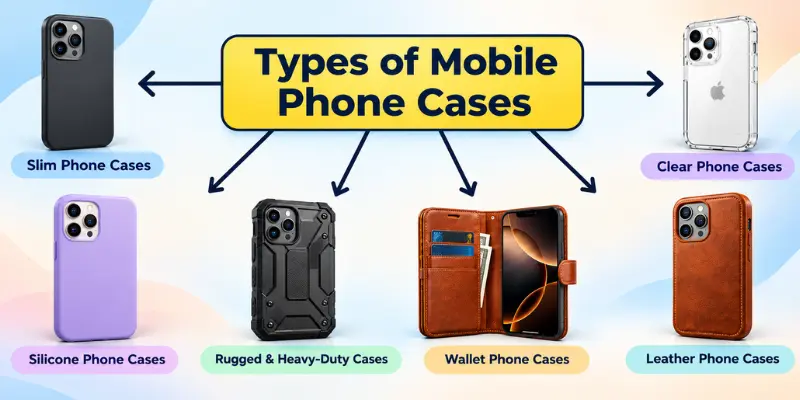
1. Slim Phone Cases
Slim phone cases are designed for users who want basic protection without adding extra thickness to their smartphone.
They are normally light and retain the look and styling of the phone. The cases are favored by those whose priority is to safeguard their phones from scratch marks, fingerprints, and bumps.
| Advantages of Slim Cases: |
|---|
|
| Disadvantages of Slim Cases: |
|---|
|
2. Clear Phone Cases
Clear phone covers are in high demand among consumers who require a cover for their mobile phones that allows them to see the original colors and designs of their phones. Clear cases offer an easy way to protect a phone without covering its appearance.
Most clear cases are made from transparent TPU or polycarbonate materials. TPU clear cases usually offer better flexibility and shock absorption, while hard plastic clear cases provide a more rigid structure.
| Advantages of Clear Cases: |
|---|
|
| Disadvantages of Clear Cases: |
|---|
|
A clear case is a good choice for users who want protection without hiding their phone’s appearance.
3. Silicone Phone Cases
Silicone phone cases are among the most commonly used cases because they provide a soft texture and comfortable grip. The flexible silicone material helps prevent accidental slips by making the phone easier to hold.
These cases come in a wide range of colors and styles and are thus favored by users who seek both protection and customization. While silicone cases offer protection from scratches and minor drops, they do not necessarily offer the same protection that tough cases offer.
| Advantages of Silicone Cases: |
|---|
|
| Disadvantages of Silicone Cases: |
|---|
|
4. TPU Phone Cases
TPU (Thermoplastic Polyurethane) phone cases are one of the most popular choices because they provide a balance between flexibility, durability, and protection. These cases are softer than hard plastic cases but stronger than regular silicone cases, making them suitable for everyday smartphone users.
Due to the flexibility of TPU, the case is capable of absorbing shocks and protecting the phone from scratches, bumps, and falls. Many clear and hybrid phone cases use TPU because it provides good protection while keeping the case lightweight.
| Advantages of TPU Cases: |
|---|
|
| Disadvantages of Silicone Cases: |
|---|
|
5. Rugged and Heavy-Duty Phone Cases
Rugged phone cases are designed for users who need maximum protection for their smartphones. These cases are built to handle accidental drops, strong impacts, dust, and rough usage conditions.
While slim cases tend to have only one layer of protection, tough cases will usually consist of more than one layer of protection, such as a soft inner layer for shock absorption and a hard outer shell for added protection.
| Advantages of Rugged Cases: |
|---|
|
| Disadvantages of Rugged Cases: |
|---|
|
6. Wallet Phone Cases
Wallet phone cases combine smartphone protection with the convenience of carrying cards and cash in one place. These cases usually include card slots or compartments where users can store IDs, bank cards, and small amounts of money.
Most wallets come with a flip case cover that helps protect the screen of the phone in the closed position. They are particularly helpful for individuals who like to travel light.
| Advantages of Wallet Phone Cases: |
|---|
|
| Disadvantages of Wallet Phone Cases: |
|---|
|
7. Leather Phone Cases
Leather phone cases are designed for users who want a luxurious look and elegant style. They are often preferred by users who want their smartphones to look good while staying protected
Leather phone cases are available in real leather and artificial leather types.The leather gives a luxurious look, but it is mostly selected for its comfort and style rather than its impact protection capabilities.
| Advantages of Leather Phone Cases: |
|---|
|
| Disadvantages of Leather Phone Cases: |
|---|
|
8. Waterproof Phone Cases
The main purpose of waterproof phone cases is to ensure safety of smartphones from any water, humidity, and dust. Such cases are helpful for people who like outdoor activities, such as swimming, walking, traveling, and visiting the beach.
Waterproof phone cases usually have sealed edges and special protective elements that help prevent water from getting inside. However, users should check the protection level and product specifications carefully because waterproof claims can vary between products.
| Advantages of Waterproof Cases: |
|---|
|
| Disadvantages of Waterproof Cases: |
|---|
|
9. Battery Phone Cases
Battery phone cases include a built-in battery that allows users to charge their smartphones while carrying the case. They are designed for people who need extra battery life during travel, work, or long outdoor activities.
These cases eliminate the need to carry a separate power bank but usually add additional weight because of the built-in battery.
| Advantages of Battery Phone Cases: |
|---|
|
| Disadvantages of Battery Phone Cases: |
|---|
|
Battery cases are best suited for people who need longer phone usage throughout the day.
10. Magnetic Phone Cases
Magnetic phone cases are designed with built-in magnets that allow compatibility with magnetic accessories and wireless charging systems. They have become more popular with smartphones that support magnetic attachment features.
These cases allow users to connect compatible chargers, stands, wallets, and other accessories without removing the case.
| Advantages of Magnetic Cases: |
|---|
|
| Disadvantages of Magnetic Cases: |
|---|
|
How to Choose the Right Mobile Phone Case?
Choosing the right mobile phone case depends on how you use your phone and the level of protection you need. Before buying a phone case, it is important to keep the following points in mind:
Prior to buying a phone case, it is important to keep in mind the following crucial points:
- Check Your Phone Model: Always buy a case that is designed for your phone model because it will provide the best fit, along with camera protection and easy access to the buttons.
- Choose the Right Protection Level: Slim and clear cases are suitable for basic protection, while rugged cases are better for users who need stronger protection against drops and impacts.
- Consider the Material: Different materials such as TPU, silicone, polycarbonate, and leather offer different levels of grip, durability, and protection.
- Check Additional Features: If you use wireless charging, magnetic accessories, or card storage, make sure the case supports these features.
- Focus on Quality and Comfort: A good phone case should feel comfortable in your hand, have durable construction, and provide reliable protection for everyday use.
Conclusion
So guys, in this article, we’ve covered different types of mobile phone cases in detail. Every case has its own benefits and limitations, so the right choice depends on how you use your smartphone.
I personally recommend choosing a case that provides enough protection while remaining comfortable and practical for everyday use.
Consider your phone model, material, protection level, and additional features before making your choice. If this guide helped you, share it with your friends and check out our other mobile phone guides.
Frequently Asked Questions (FAQs)
Here are answers to some common questions about the types of smartphone cases .
Rugged phone cases generally provide stronger protection against drops, impacts, and scratches. They are a good option for users who often use their phones outdoors or in demanding environments.
Yes, clear phone cases can be a good choice for everyday use if you want basic protection while keeping the original phone design visible. However, some clear materials may turn yellow over time.
To print a phone case, you can use a custom phone case printing service that allows you to upload a photo, logo, artwork, or other design. The service usually prints the design directly onto a compatible phone case and ships the finished product to you.
TPU and silicone cases both provide useful everyday protection, but they have different characteristics. TPU cases are generally more flexible and durable, while silicone cases offer a softer feel and comfortable grip, so the better option depends on your personal preference and needs.
Yes, a low-quality or improperly fitted case can damage damage your phone. Dust trapped between the case and phone may cause scratches, while a tight case can put pressure on buttons or ports. To avoid these issues, choose a case that fits well and clean it on a regular basis.
An expensive phone case is not always necessary. The important factors are its build quality, protection level, fit, and features rather than its price alone.

- Be Respectful
- Stay Relevant
- Stay Positive
- True Feedback
- Encourage Discussion
- Avoid Spamming
- No Fake News
- Don't Copy-Paste
- No Personal Attacks
- Be Respectful
- Stay Relevant
- Stay Positive
- True Feedback
- Encourage Discussion
- Avoid Spamming
- No Fake News
- Don't Copy-Paste
- No Personal Attacks
