Advantages and Disadvantages of the Internet: 12 Key Facts
Published: 18 Jul 2026
The internet has become an important part of modern life. Students use it for learning, professionals use it for work, businesses use it to reach customers, and families use it to communicate. It also allows people to shop, make payments, watch videos, access public services, and find information quickly.
However, the internet is not completely free from risks. Unsafe or excessive use can lead to privacy problems, cybercrime, misinformation, health concerns, online scams, and internet addiction.
Understanding the advantages and disadvantages of the internet can help people use it more responsibly. This article explains 12 unique benefits and 12 drawbacks of the internet, along with practical examples and online safety tips. So, let’s dive in
Quick Overview of Internet Pros and Cons
The following table provides a quick overview of the main internet pros and cons. Each point is explained in greater detail later in the article.
| 12 Advantages of the Internet | 12 Disadvantages of the Internet |
|---|---|
| ✅Quick Access to Information | ❌Privacy and Data Security Risks |
| ✅Fast Global Communication | ❌Risk of Cybercrime and Phishing Attacks |
| ✅Remote Work and Employment Opportunities | ❌Fake News and Misinformation |
| ✅Online Education and Learning | ❌Internet Addiction and Time Wastage |
| ✅Convenient Online Shopping | ❌Physical Health Problems |
| ✅Internet Banking and Digital Payments | ❌Mental and Emotional Pressure |
| ✅Business Growth and Internet Advertising | ❌Cyberbullying and Online Harassment |
| ✅Access to Healthcare Services | ❌Exposure to Harmful Content |
| ✅Easy Access to Digital Entertainment | ❌Reduced Face-to-Face Interaction |
| ✅Creativity and Content Creation | ❌Online Shopping and Financial Scams |
| ✅Social Awareness and Global Connection | ❌Dependence on Technology |
| ✅Access to Government and Public Services | ❌Digital Divide and Unequal Access |
The pros and cons of the internet show that it can improve education, communication, work, and daily convenience. At the same time, users must protect their personal information, control their screen time, and recognize online risks.
What Is the Internet and Why Is It Important?
The internet is a global network that connects computers, smartphones, servers, and other digital devices. It allows people to share information and access services such as websites, email, video calls, online shopping, banking, social media, and streaming.
The internet is important because it provides quick access to information and services, regardless of distance. Students can attend online classes, doctors can consult patients remotely, and businesses can reach customers in different cities or countries.
According to the International Telecommunication Union, approximately 6 billion people, or 74% of the global population, were using the internet in 2025. However, around 2.2 billion people were still offline, showing that internet access remains unequal worldwide.
Advantages of the Internet
The advantages of the internet affect almost every part of modern life. It provides educational opportunities, improves communication, supports businesses, and makes everyday activities more convenient.
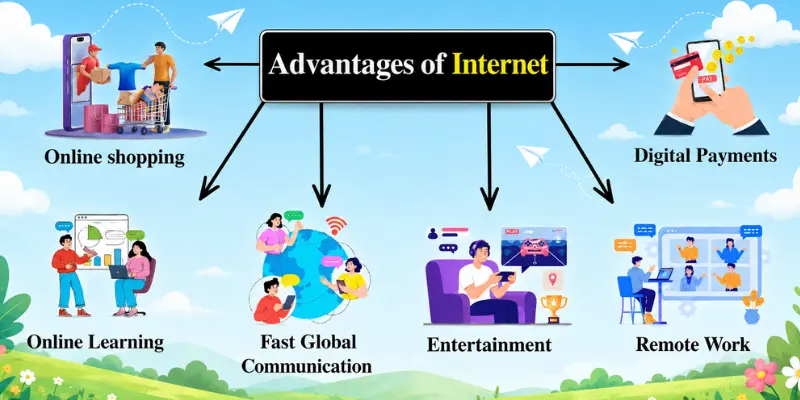
Here are 12 major advantages of the internet.
1. Quick Access to Information
One of the greatest benefits of the internet is quick access to information. Search engines, online libraries, educational websites, digital newspapers, and research databases allow people to find information within seconds.
Students can research school projects, professionals can study industry developments, and general users can find instructions for everyday tasks.
However, not every website provides accurate information. Users should check the author, publication date, evidence, and reliability of a source before trusting or sharing it.
2. Fast Global Communication
The internet allows people to communicate instantly through email, messaging applications, social media, voice calls, and video meetings.
Families can stay connected across countries, students can discuss assignments with classmates, and employees can communicate with their teams without being in the same building.
Internet communication is usually faster and less expensive than traditional international communication. It has also made collaboration between people from different cultures and locations much easier.
3. Remote Work and Employment Opportunities
The internet has created new employment opportunities and made remote work possible. People can search for jobs, attend online interviews, work from home, offer freelance services, or build professional networks.
Businesses can hire skilled workers without limiting themselves to one location. Similarly, freelancers can work with clients from other cities or countries.
Remote work can reduce travelling time and offer greater flexibility. However, workers still need a reliable internet connection, good time-management skills, and a healthy work-life balance.
4. Online Education and Learning
The internet has made education more accessible. Students can attend virtual classes, watch educational videos, download study materials, take practice tests, and complete online courses.
Adults can also learn professional skills such as writing, programming, marketing, designing, or speaking another language. This makes learning possible for people who cannot attend a traditional school or training centre.
For example, a student living far from a major city can study a subject through online lessons that may not be available locally.
5. Convenient Online Shopping
Online shopping allows customers to purchase products without visiting a physical store. They can compare prices, read product details, check customer reviews, and order items at any time.
This is especially helpful for busy workers, parents, people with limited mobility, and customers who live far from shopping centres.
Online stores may also provide a wider range of products than local shops. However, buyers should check the seller, delivery conditions, return policy, and payment method before placing an order.
6. Internet Banking and Digital Payments
Internet banking allows users to check their account balance, transfer money, pay bills, download statements, and manage transactions without visiting a bank branch.
Digital payments are also useful for shopping, subscriptions, transport, and business transactions. These services can save time and remain available outside normal banking hours.
The advantages and disadvantages of internet banking must both be understood. Although online banking is fast and convenient, users must protect their passwords, avoid fake banking links, and never share their PINs or one-time passwords.
6. Internet Banking and Digital Payments
Internet banking allows users to check their account balance, transfer money, pay bills, download statements, and manage transactions without visiting a bank branch.
Digital payments are also useful for shopping, subscriptions, transport, and business transactions. These services can save time and remain available outside normal banking hours.
The advantages and disadvantages of internet banking must both be understood. Although online banking is fast and convenient, users must protect their passwords, avoid fake banking links, and never share their PINs or one-time passwords.

7. Business Growth and Internet Advertising
The internet helps businesses reach customers through websites, search engines, social media, email, and online marketplaces.
Internet advertising can be more affordable than some traditional advertising methods. It also allows businesses to target people based on their interests, location, or needs and measure how their campaigns perform.
Small businesses can use the internet to compete with larger companies, display their products, receive customer feedback, and sell beyond their local area.
8. Access to Healthcare Services
The internet can make healthcare information and services easier to access. Patients may book appointments, receive test results, attend remote consultations, or access guidance from official health organizations.
Telemedicine can be particularly useful for people living in remote areas or those who have difficulty travelling.
However, online information should not replace professional medical advice. Health claims from unknown websites or social media accounts may be inaccurate, incomplete, or dangerous.
9. Easy Access to Digital Entertainment
The internet offers a wide range of entertainment for people of all ages. Users can watch movies and TV shows, listen to music, play games, read digital books, follow live events, and connect with friends through social media.
Unlike traditional entertainment, online content is available at almost any time and can be accessed from smartphones, computers, or smart TVs. People can also explore new hobbies, discover creators, and choose content based on their interests.
However, online entertainment should be enjoyed in moderation so that it does not affect study, work, sleep, exercise, or personal relationships.
10. Creativity and Content Creation
The internet gives people many tools and platforms to express their creativity. Users can write blogs, create videos, produce music, design graphics, share photography, or build digital projects.
Students can use these platforms to develop creative skills, while adults may turn a hobby into a career or business. The internet also allows creators to share their work with audiences around the world.
11. Social Awareness and Global Connection
The internet helps people learn about events, cultures, social issues, and communities around the world.
Charities and community groups can raise awareness, collect support, organize events, and share emergency information. People with similar experiences can also find support groups and communicate with others who understand their challenges.
This global connection can improve cultural understanding. However, users should avoid judging complex issues only through short posts or unverified content.
12. Access to Government and Public Services
Many government departments and public organizations now provide online services. People can apply for documents, submit forms, pay fees, access public information, register complaints, and schedule appointments through official portals.
These services can reduce long queues, save travel time, and make administrative processes more convenient and easier to track.
Before entering personal information or making a payment, users should always confirm that they are using an official government website.
Disadvantages of the Internet
Despite its many benefits, the internet can create serious problems when it is used carelessly, excessively, or without proper safety measures.
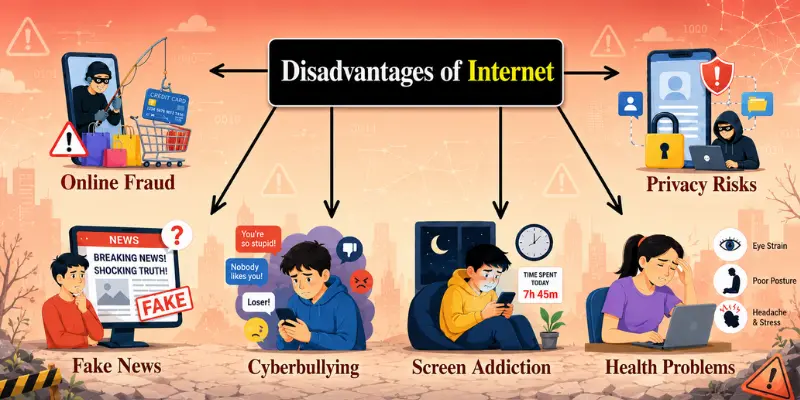
Here are 12 important disadvantages of the internet that users should understand.
1. Privacy and Data Security Risks
Websites and apps may collect information about users, including their location, interests, search history, purchases, and online activity.
Sharing too much personal information can increase the risk of identity theft, unwanted tracking, impersonation, and targeted scams. Data breaches can also reveal passwords, email addresses, or financial information.
To protect their privacy, users should review app permissions, adjust privacy settings, and avoid sharing sensitive information such as home addresses, identity documents, travel plans, or banking details online.
2. Risk of Cybercrime and Phishing Attacks
Cybercriminals use fake emails, messages, websites, and apps to steal money, passwords, or personal information.
Phishing messages often appear to come from trusted sources, such as banks, delivery companies, employers, government departments, or popular online services. They may create urgency and pressure users to click a suspicious link, download a harmful file, or reveal sensitive information.
Strong and unique passwords provide basic protection, while multifactor authentication adds an extra layer of security and makes unauthorized access more difficult.
3. Fake News and Misinformation
The internet allows information to spread quickly, but false information can spread just as fast.
Misleading news, edited images, fake videos, unsupported health advice, and false claims may influence people’s decisions. Artificial intelligence can also make fabricated content appear realistic.
Users should check the original source and context, compare information with reliable websites, and avoid sharing sensational claims before verifying them.
4. Internet Addiction and Time Wastage
Some websites, social media platforms, games, and apps are designed to keep users engaged for long periods. Endless scrolling, notifications, and short videos can make it difficult to control how much time they spend online.
Excessive internet use may affect studies, work performance, sleep, household responsibilities, physical activity, and offline relationships.
The World Health Organization reported that 11% of adolescents in a large international study showed signs of problematic social media use, including difficulty controlling their behaviour and experiencing negative effects in daily life.
Setting daily time limits, turning off unnecessary notifications, taking regular breaks, and creating device-free periods can help users develop healthier internet habits.
5. Physical Health Problems
Spending long hours on digital devices may lead to eye strain, headaches, poor posture, neck or back pain, reduced physical activity, and sleep problems.
These effects are not caused by the internet alone. They are often connected with unhealthy habits, such as sitting incorrectly, using screens without breaks, or staying online late at night.
Users can reduce these risks by taking regular breaks, adjusting their screen position, exercising, and following a consistent sleep routine.
6. Mental and Emotional Pressure
Online platforms can create emotional pressure through constant comparison, negative comments, fear of missing out, and the desire to appear successful.
Social media often presents carefully selected moments rather than a complete picture of someone’s life. Comparing personal struggles with another person’s edited highlights may lower self-confidence and create feelings of stress, loneliness, or dissatisfaction.
The pressure to gain likes, followers, or approval can also affect self-esteem. Users should limit unhealthy comparisons, follow positive content, and seek support from a trusted person if online activity begins to affect their mood or emotional well-being.
7. Cyberbullying and Online Harassment
Cyberbullying includes repeated harmful behaviour through social media, games, messaging apps, email, or other digital platforms. It may involve threats, rumours, embarrassing posts, fake accounts, or impersonation.
Unlike traditional bullying, harmful posts or messages can reach many people quickly and may remain visible for a long time.
UNICEF recommends saving evidence, blocking or reporting the offender, and seeking help from a trusted adult or appropriate authority.
8. Exposure to Harmful Content
The internet may expose users, especially children and teenagers, to violent, hateful, misleading, age-inappropriate, or dangerous content.
Harmful material may appear unexpectedly through recommendations, advertisements, messages, search results, or online communities. Some online challenges may also encourage unsafe or risky behaviour.
Parents and guardians should maintain open communication, use age-appropriate safety settings, and guide younger users instead of relying only on monitoring tools.
9. Reduced Face-to-Face Interaction
Online communication makes it easy to stay connected, but it cannot fully replace meeting and talking with people in person.
People who spend too much time online may give less attention to their family, friends, and community. Over time, this can weaken real-life communication skills and make a person feel lonely or socially disconnected.
To maintain healthy relationships, people should balance online communication with family time, social activities, and face-to-face conversations.
10. Online Shopping and Financial Scams
Online shopping is convenient, but it also carries risks such as fake sellers, misleading product images, counterfeit products, hidden charges, and delivery or refund problems. Scammers may create fake websites or advertisements to collect payments without delivering the promised products.
The US Federal Trade Commission recommends checking seller reviews, return policies, and payment methods before making a purchase. Customers should be especially careful when an offer seems unrealistically cheap, or a seller asks for an unusual payment method.
11. Dependence on Technology
People and organizations may become highly dependent on internet-based systems.
When a network, application, payment service, or cloud platform stops working, users may be unable to communicate, work, study, access documents, or complete transactions.
Overdependence can also reduce practical offline skills. People should keep important contact details, essential documents, and basic alternatives available for emergencies.
12. Digital Divide and Unequal Access
Not everyone has equal access to fast internet, suitable devices, affordable data, or digital skills.
People in rural or low-income communities may struggle to attend online classes, apply for jobs, use government portals, or access digital healthcare. This creates differences in educational, financial, and professional opportunities.
According to the International Telecommunication Union (ITU), around 2.2 billion people were still offline in 2025. The organization also reported ongoing gaps in internet affordability, connection quality, and digital skills around the world.

Real-Life Examples of Internet Advantages and Disadvantages
The following examples show how the same technology can provide benefits and create risks.
Examples of Internet Advantages :
- A student watches lessons on YouTube and attends online classes from home.
- A small business sells products through Amazon or its own website to reach more customers.
- A remote employee uses Zoom or Microsoft Teams to work with colleagues worldwide.
- A patient books an online doctor’s appointment through a healthcare website or app.
- A family living in different countries stays connected through WhatsApp or Google Meet video calls.
Examples of Internet Disadvantages:
- A shopper loses money after visiting a fake website pretending to be Amazon.
- A student spends hours on TikTok instead of studying.
- A user shares too much personal information on Facebook, increasing privacy risks.
- Someone believes fake news on X (Twitter) without checking the source.
- A teenager faces cyberbullying through abusive messages on Instagram.
How to Use the Internet Safely and Wisely
The internet becomes more useful when people develop safe, balanced, and responsible habits. Here are some important internet safety tips:
- Use strong and unique passwords for all your important online accounts.
- Enable multifactor authentication (MFA) to add an extra layer of account security.
- Never share passwords, PINs, or OTPs with anyone, even if they claim to be from a trusted organization.
- Verify information before sharing it to avoid spreading fake news or misinformation.
- Avoid suspicious links and downloads from unknown emails, messages, or websites.
- Protect your personal information by limiting what you share online and checking your privacy settings.
- Shop and bank only through trusted websites and official apps to reduce the risk of fraud.
- Keep your devices, browsers, and apps updated with the latest security updates.
- Set healthy screen-time limits to maintain a good balance between online and offline life.
- Report and block cyberbullying or suspicious online activity instead of responding to it.
Is the Internet Good or Bad?
The internet is neither completely good nor completely bad. Its impact depends on how people use it.
When used wisely, it can improve education, communication, healthcare, business, and access to information. It helps students learn, allows professionals to work remotely, and keeps families connected across long distances.
However, careless or excessive use can lead to privacy risks, cybercrime, misinformation, addiction, health problems, and online scams.
Overall, the internet is beneficial when users protect their personal information, verify online content, limit screen time, and follow safe digital habits.
Conclusion
So guys, in this article, we’ve covered the advantages and disadvantages of the internet in detail. In my view, the internet is one of the most useful tools of modern life, but its benefits depend on how carefully we use it.
I recommend using trusted websites, protecting personal information, and avoiding excessive screen time.
Now share your opinion in the comments: do you think the internet is more helpful or harmful?
Frequently Asked Questions (FAQs)
Here are the answers to some common questions about the pros and cons of the internet:
The internet helps students attend online classes, watch educational videos, and access study materials. It also allows them to research topics and learn new skills from anywhere. However, students should use reliable sources and avoid online distractions.
The internet can be good for children when it is used for education, creativity, and communication. It can become harmful if children face cyberbullying, unsafe content, strangers, or excessive screen time. Parents should provide guidance and use age-appropriate safety settings.
Internet advertising helps businesses reach a large and targeted audience at a lower cost. It also allows companies to measure results and improve their campaigns. However, misleading ads, excessive tracking, privacy concerns, and advertising fraud are common disadvantages.
The 10 main advantages of the internet are:
- Quick access to information
- Online education and learning
- Fast communication
- Remote work opportunities
- Convenient online shopping
- Internet banking and digital payments
- Business growth
- Access to healthcare services
- Digital entertainment
- Government and public services
These benefits make daily life easier, faster, and more convenient.
The 10 main disadvantages of the internet are:
- Privacy and data-security risks
- Cybercrime and phishing
- Fake news and misinformation
- Internet addiction
- Physical health problems
- Mental and emotional pressure
- Cyberbullying
- Exposure to harmful content
- Online shopping and financial scams
- Reduced face-to-face interaction
Safe, balanced, and responsible internet use can reduce many of these risks.
The internet has many positive applications in daily life. These include online education, video calls, online banking, e-commerce, and telemedicine. They help people learn, communicate, shop, manage finances, and access healthcare more easily.
The internet allows businesses to communicate quickly through email, messaging apps, video meetings, and shared work platforms. It helps employees, customers, and business partners stay connected across different cities or countries. This can reduce communication costs and improve teamwork.
Online shopping can involve risks such as fake sellers, counterfeit products, payment fraud, and delivery problems. Buyers may also face hidden charges or receive items that do not match the product description. Shopping only from trusted websites and using secure payment methods can reduce these risks.
Online education offers flexibility and easy access to learning from anywhere. However, traditional classes provide face-to-face interaction, practical activities, and a structured learning environment. The better option depends on a student’s learning style and educational needs.
The internet can lead to privacy risks, cyberbullying, online scams, misinformation, and internet addiction. Spending too much time online may also affect physical and mental health. Following safe internet habits can help reduce these risks and negative effects.
Yes, AI tools are generally safe to use, but you should avoid sharing sensitive personal or financial information. It is also important to verify AI-generated information from reliable sources before relying on it.






- Be Respectful
- Stay Relevant
- Stay Positive
- True Feedback
- Encourage Discussion
- Avoid Spamming
- No Fake News
- Don't Copy-Paste
- No Personal Attacks
- Be Respectful
- Stay Relevant
- Stay Positive
- True Feedback
- Encourage Discussion
- Avoid Spamming
- No Fake News
- Don't Copy-Paste
- No Personal Attacks
