Mobile Phones for Students: Benefits, Risks, and Smart Use
Published: 15 Sep 2026
Mobile phones have changed the way students learn, communicate, and manage their daily activities. A device that was once mainly used for calling and messaging is now used for online classes, educational apps, research, and skill development.
But are mobile phones always good for students? Not necessarily. Excessive screen time, social media, games, and constant notifications can make it harder to focus and may affect academic performance, health, and social life.
In this guide, we will explore the advantages and disadvantages of mobile phones for students and share practical tips to help students use their smartphones wisely without letting them interfere with their studies or daily life. So, let’s dive in.
Why Are Mobile Phones Important for Students Today?
Mobile phones are now an important part of student life, offering more than just communication. With internet access and educational tools, students can use smartphones to support their studies and manage daily tasks.
Some common uses include:
- Online learning: Attend classes and access educational courses.
- Quick research: Find information and study resources.
- Study tools: Use calculators, dictionaries, and note-taking apps.
- Communication: Stay connected with teachers and classmates.
- Time management: Set reminders and manage tasks.
However, using a phone wisely is important because excessive use can become a distraction. That is why it is important to understand both the benefits and drawbacks of mobile phones for students.
Advantages and Disadvantages of Mobile Phones for Students
Mobile phones can be powerful learning tools for students, but using them too much can also create problems. Here’s a quick look at the main pros and cons of mobile phones before we explore each one in detail.
| Pros: |
|---|
|
| Cons: |
|---|
|
Let’s now discuss these merits and demerits in detail.
Advantages of Mobile Phones for Students
From easier learning to better organization, mobile phones can offer students several practical benefits. Here are 10 main advantages of mobile phones.
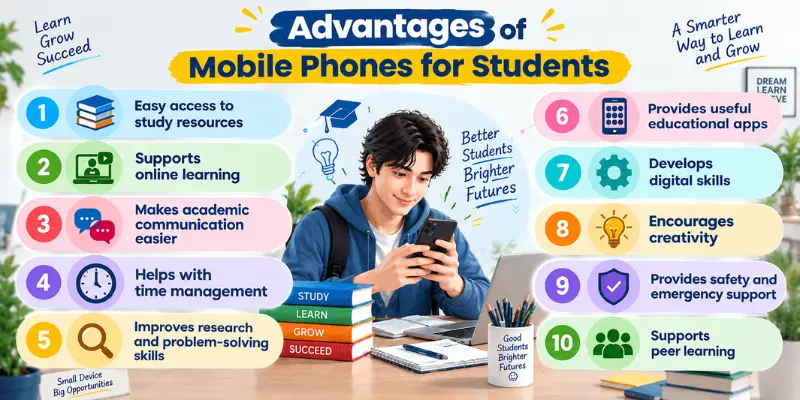
1. Easy Access to Information & Study Resources
One of the biggest advantages of mobile phones for students is quick access to educational information. Smartphones allow students to find learning materials, research articles, digital books, and educational websites anytime and anywhere.
Instead of waiting for library resources or physical books, students can instantly search for information related to their subjects. This encourages independent learning and helps students explore topics beyond their classroom lessons.

For example, a student preparing for an exam can use online resources to review concepts, practice questions, and improve understanding of difficult topics.
2. Supports Online Learning and Virtual Education
Mobile phones have made online learning more accessible for students. Many educational platforms offer video lessons, online courses, and virtual classrooms that can be accessed through smartphones.
Students can:
- Attend online lectures
- Watch recorded lessons
- Complete digital assignments
- Learn new skills through courses
This flexibility allows students to continue learning even outside school or college. Students who cannot attend physical classes regularly can also benefit from online education opportunities.
3. Improves Communication with Teachers and Classmates
Mobile phones make academic communication faster and easier. Students can stay connected with teachers and classmates to discuss lessons, assignments, and projects.
Group chats and online collaboration tools allow students to:
- Exchange ideas
- Share notes
- Work on group projects
- Receive important announcements
Better communication can improve teamwork and help students solve academic problems more effectively.
4. Helps Students Manage Time and Stay Organized
Smartphones provide useful tools that help students organize their academic activities. Features such as calendars, reminders, alarms, and note-taking applications can help students manage their schedules.
Students can use mobile phones to:
- Set study reminders
- Create assignment deadlines
- Plan exam preparation
- Track important tasks
When used correctly, these tools can improve time management and productivity.
5. Improves Research and Problem-Solving Skills
Mobile phones encourage students to become independent learners. Instead of depending only on teachers for answers, students can research topics and find solutions themselves.
Searching for information online helps students develop:
- Critical thinking
- Research abilities
- Problem-solving skills
- Curiosity about different subjects
A student who learns how to find and evaluate reliable information can become a more confident learner.
6. Provides Useful Educational Apps and Learning Tools
Modern smartphones give students access to thousands of educational applications that can support different areas of learning. These apps can make difficult subjects easier to understand by providing interactive lessons, practice exercises, and instant feedback.
Students can use mobile applications for:
- Learning new languages
- Improving mathematics skills
- Practicing science concepts
- Building vocabulary
- Creating digital notes
For example, a student learning a new language can practice pronunciation and vocabulary through language-learning apps, while another student can use mathematics applications to solve complex problems and understand formulas.
When chosen carefully, educational apps can make learning more engaging and help students improve their academic skills outside the classroom.
7. Develops Digital and Technology Skills
In today’s digital world, technology skills are important for education, careers, and personal projects. Mobile phones help students become comfortable with digital tools and technology.
By using smartphones for productive purposes, students can learn how to:
- Search for reliable information online
- Use digital platforms
- Communicate professionally
- Use online tools and resources
- Understand modern technology
For example, a college student can use a smartphone to learn blogging, freelancing, e-commerce, or content creation while studying. These skills can provide practical experience and may even help students generate income.
8. Encourages Creativity and Innovation
Mobile phones are not only learning devices; they can also become tools for creativity. Many smartphones now have advanced cameras, editing apps, and design tools that let students express their ideas and explore creative interests.
Students can use mobile phones for:
- Creating educational videos
- Designing presentations
- Editing photos and videos
- Writing blogs or digital content
- Exploring hobbies like drawing and photography
- Creating music or other creative projects
For example, a student interested in science can create an educational video explaining a concept, while a student interested in art can practice digital design using creative apps.
When used properly, smartphones can help students explore their interests, develop creative skills, and turn their ideas into useful projects.
9. Provides Safety and Emergency Support
Another important benefit of mobile phones is that they provide safety and quick communication during emergencies. Students can easily contact their parents, teachers, or emergency services when necessary.
Mobile phones can help students by providing:
- Quick contact with family members
- Location-sharing features
- Emergency calling options
- Access to important information
For parents, being able to communicate with their children provides reassurance, especially when students travel to school, attend events, or stay away from home.
However, students should use these features responsibly and avoid sharing personal information with unknown people online.
10. Promotes Collaborative Learning
Mobile phones encourage students to work together and learn as a team. Through online platforms and communication tools, students can collaborate on projects, share ideas, and support each other’s learning.
Examples of collaborative learning through smartphones include:
- Sharing class notes
- Discussing assignments
- Working on group projects
- Participating in online study groups
This type of teamwork helps students improve communication skills and learn from different perspectives. When used for academic purposes, mobile phones can make learning more interactive and connected.
Disadvantages of Mobile Phones for Students
While mobile phones provide many educational benefits, their excessive or improper use can create several challenges. Here are 10 key disadvantages students should know about.
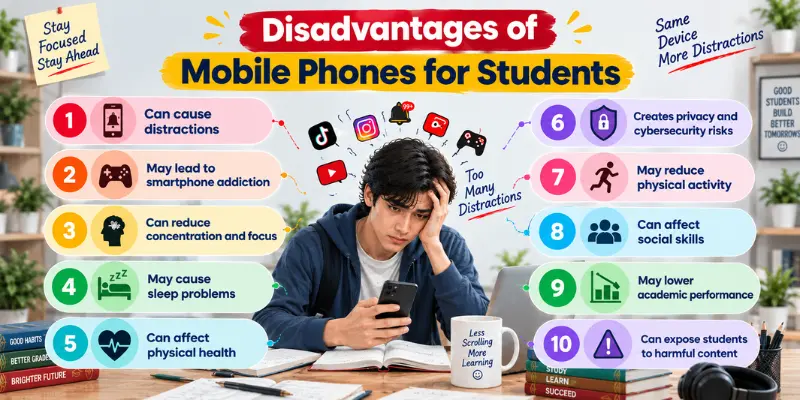
1. Creates Distraction from Studies
One of the biggest disadvantages of mobile phones for students is distraction. Smartphones provide access to social media, games, entertainment videos, and constant notifications, which can interrupt study time.
A student may plan to use a phone for a few minutes but end up spending hours browsing unnecessary content. This reduces the time available for homework, revision, and academic activities.
To avoid distractions, students should:
- Turn off unnecessary notifications
- Use focus mode during study sessions
- Set specific times for entertainment
Using a mobile phone with discipline is important to maintain academic focus.
2. Leads to Smartphone Addiction
Excessive mobile phone use can lead to smartphone addiction, where students feel the need to check their devices repeatedly throughout the day.
Signs of unhealthy phone dependency may include:
- Spending too much time on the phone
- Feeling uncomfortable without a device
- Ignoring studies or responsibilities
- Using phones late at night
Smartphone addiction can affect productivity, concentration, and daily routines. Students should create healthy boundaries and balance screen time with offline activities.
3. Reduces Concentration and Focus
Frequent mobile phone use can make it harder for students to concentrate on important tasks. Constant switching between study materials, messages, and social media can reduce attention span.
For example, a student preparing for an exam may struggle to remember information if they continuously check phone notifications while studying.
Developing focused study habits, such as keeping phones away during important learning sessions, can help students improve concentration.
4. Causes Sleep Problems
Using mobile phones for long periods, especially before bedtime, can negatively affect students’ sleep routines. Many students spend late hours watching videos, chatting, or browsing social media instead of getting proper rest.

Poor sleep can lead to:
- Reduced energy
- Difficulty concentrating
- Lower academic performance
- Mood changes
Students should avoid excessive phone use before sleeping and create a healthy nighttime routine.
➡️You may also Like this Post: How to Stop Using Phone at Night: 9 Tips for Better Sleep
5. Affects Physical Health
Long hours of smartphone use can contribute to physical health problems. Spending too much time looking at screens may cause eye strain, while poor sitting posture can lead to neck and back discomfort.
Common problems related to excessive phone use include:
- Eye fatigue
- Headaches
- Neck pain
- Poor posture
Taking regular breaks, maintaining proper posture, and reducing unnecessary screen time can help prevent these issues.
6. Creates Cybersecurity and Privacy Risks
Mobile phones provide access to the internet, but they also expose students to different online risks. Many students are not fully aware of privacy settings, safe browsing practices, or the dangers of sharing personal information online.
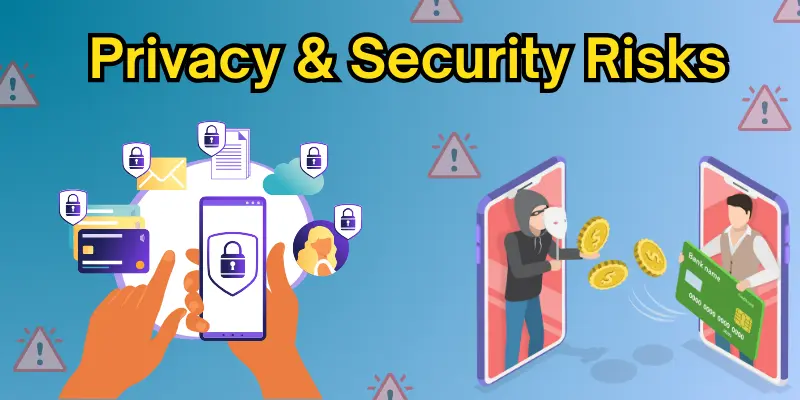
Some common risks include:
- Cyberbullying
- Online scams
- Identity theft
- Unsafe websites
- Unauthorized access to personal data
Students may accidentally share private information, click on harmful links, or interact with unknown people online. Therefore, learning basic digital safety skills is important.
Parents and teachers should guide students about responsible internet use and help them understand how to protect their personal information.
7. Reduces Physical Activities
Excessive mobile phone use can reduce the time students spend on physical activities. Many students prefer spending hours on social media, games, or videos instead of participating in sports or outdoor activities.
A lack of physical activity can affect:
- Physical fitness
- Energy levels
- Overall health
- Mental well-being
A healthy lifestyle requires a balance between digital activities and physical movement. Students should make time for exercise, outdoor games, and hobbies that do not involve screens.
8. Affects Social Skills and Real-Life Interaction
Although mobile phones improve online communication, excessive use can reduce face-to-face interactions. Students who spend most of their free time on smartphones may have fewer opportunities to develop real-life communication skills.
Overdependence on digital communication can affect:
- Confidence in social situations
- Teamwork abilities
- Personal relationships
Meeting friends, participating in discussions, and engaging in group activities are important for developing strong social skills.
Mobile phones should support communication, not replace real human connections.
9. Can Negatively Affect Academic Performance
While smartphones can support learning, they can also negatively affect academic performance when used incorrectly.
Students who spend too much time on entertainment apps or social media may experience:
- Less time for studying
- Poor homework completion
- Reduced preparation for exams
- Lower productivity
The problem is not the device itself but how it is used. Students who maintain a healthy balance between study and entertainment can reduce these negative effects.
10. Exposure to Harmful Online Content
The internet provides a huge amount of information, but not all content is suitable for students. Without proper guidance, students may come across inappropriate, misleading, or harmful material that can negatively affect their thoughts, behavior, or online habits.
Potential risks include:
- Accidentally viewing harmful or inappropriate content
- Coming across misleading information online
- Seeing inappropriate ads on apps and websites
- Joining unsafe online communities or chat groups
- Watching videos or playing games with unsuitable content
Parents and teachers can help students by teaching safe and responsible internet use and encouraging them to rely on trustworthy educational resources.
How Students Can Use Mobile Phones Responsibly
Mobile phones are not automatically harmful or beneficial. Their impact depends on how they are used. Students can gain more benefits from smartphones by developing healthy digital habits.
- Set screen time limits: Set daily limits for gaming, social media, and other entertainment activities to maintain a healthy balance between phone use and studies.
- Use educational applications: Choose apps that support learning, skill development, and productivity instead of spending most of your time on entertainment.
- Keep phones away during study sessions: Put your phone away or turn on focus mode while studying to reduce distractions and improve concentration.
- Turn off unnecessary notifications: Disable alerts from social media and entertainment apps so constant notifications do not interrupt your learning.
- Maintain online and offline balance: Make time for physical activities, hobbies, family, and friends instead of depending only on digital communication.
- Follow digital safety practices: Avoid sharing private information, use strong passwords, stay away from suspicious links, and communicate responsibly online.
Should Students Be Allowed to Use Mobile Phones in Schools?
The question of whether students should be allowed to use mobile phones in schools has different perspectives. Some people believe phones can improve learning, while others argue that they create distractions.
Benefits of Allowing Mobile Phones in Schools
Mobile phones can support education by allowing students to:
- Access digital learning materials
- Use educational applications
- Research information quickly
- Communicate during emergencies
With proper rules, smartphones can become useful classroom tools.
Problems of Mobile Phones in Schools
On the other hand, uncontrolled phone use can lead to:
- Classroom distractions
- Cheating during exams
- Reduced attention
- Misuse of technology
The best approach is not a complete ban but controlled usage. Schools can create clear policies about when and how students can use mobile phones.
Interesting Facts About Mobile Phones Every Student Should Know
Mobile phones have an interesting history and many surprising facts. Here are some interesting facts every student should know.
- The first mobile phone call was made on April 3, 1973.
- The first handheld mobile phone weighed 2.5 pounds (1.1 kg).
- IBM Simon was one of the first smartphones, released in 1994.
- The first SMS message was sent in 1992 and said “Merry Christmas.
- An early camera phone was introduced in Japan in 1999.
- The Nokia 1100 sold more than 250 million units worldwide.
- The Nokia 3310 became famous for its durability and long battery life.
- Mobile phones can carry more bacteria than toilet seats due to frequent handling.
Conclusion
So guys, in this article, we’ve covered the pros and cons of mobile phones for students in detail. Mobile phones can make learning easier, improve communication, provide useful study tools, and help students stay organized. However, excessive phone use can also cause distractions, poor sleep, reduced concentration, and other problems.
In my opinion, students should not avoid smartphones completely but learn to use them wisely and with healthy limits. Use your phone mainly for learning and productivity, while keeping entertainment under control. A smartphone can support your goals or become a distraction—it all depends on how you use it.
If you found this guide helpful, share it with other students and explore more practical mobile phone tips on our website.
Frequently Asked Questions (FAQs)
Here are the answers to some common questions about the positive and negative effects of mobile phones:
Yes, mobile phones can be useful for students when used for learning, research, communication, and productivity. Their impact mainly depends on how responsibly they are used.
Five common uses of mobile phones are making calls, sending messages, browsing the internet, attending online classes, and using apps for learning and entertainment.
Five common disadvantages of using a phone are distraction, smartphone addiction, reduced concentration, sleep problems, and physical health issues.
For Class 8 students, mobile phones can help with online learning, research, educational apps, and communication. However, excessive use can cause distractions, sleep problems, reduced concentration, and less time for physical activities.
Students should prioritize educational and productive activities, limit unnecessary entertainment, protect their personal information, and create healthy boundaries around phone use.
Useful features include calendars, reminders, note-taking tools, cameras for scanning documents, educational apps, and focus or screen-time controls.






- Be Respectful
- Stay Relevant
- Stay Positive
- True Feedback
- Encourage Discussion
- Avoid Spamming
- No Fake News
- Don't Copy-Paste
- No Personal Attacks
- Be Respectful
- Stay Relevant
- Stay Positive
- True Feedback
- Encourage Discussion
- Avoid Spamming
- No Fake News
- Don't Copy-Paste
- No Personal Attacks
