Advantages and Disadvantages of Screen Protector
Published: 16 Apr 2026
Screen protectors can help protect your phone’s screen from scratches, but they are not perfect for everyone. Many people buy one without fully understanding the pros and cons of screen protectors, and later feel disappointed due to issues like reduced touch sensitivity, bubbles, or lower screen clarity.
But don’t worry—in this article, we will clearly explain the advantages and disadvantages of screen protectors. By the end, you will have a better idea of whether a screen protector is the right choice for your phone or not.
Advantages of Screen Protector
There are several reasons why people use screen protectors on their smartphones. They are designed to add an extra layer over the phone’s display to help reduce everyday damage during regular use.
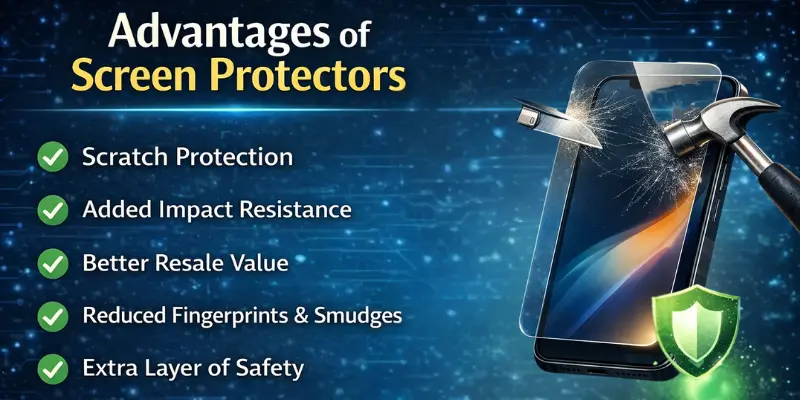
Here are the main pros of screen protectors:
- Scratch Protection
- Added Impact Resistance
- Better Resale Value
- Reduced Fingerprints and Smudges
- Extra Layer of Safety
- Blue Light Protection
- Privacy Protection Options
- Anti-Glare Features
- Cost-Effective Protection
- Better for Daily Use
Now, let’s discuss each advantage in detail.
Scratch Protection
A screen protector helps protect your phone’s screen from everyday scratches. Your phone often comes into contact with keys, coins, dust, sand, and rough surfaces. A protector takes that damage first, so the original display stays safer.
- It protects the screen from small scratches during daily use.
- It helps prevent marks caused by items in your pocket or bag.
- It keeps the original display looking cleaner for longer.
Added Impact Resistance
A good screen protector, especially tempered glass, can absorb some impact. It may not stop every crack, but it can reduce damage in small drops or minor hits. In some cases, the protector breaks while the real screen stays safe.
- It adds an extra layer between the display and outside force.
- It can reduce the effect of small accidental drops.
- It may save you from more expensive screen repair.
Better Resale Value
The resale value is another good reason to use a screen protector. When people try to resell their phones, buyers usually check the phone’s condition, especially the screen, before making a decision.
- It protects against visible damage to the actual screen.
- It makes sure that your phone looks more appealing for a longer time.
- It might increase the resale or trade-in value of your phone.
Reduced Fingerprints and Smudges
Many quality screen protectors come with an oleophobic coating. This helps reduce fingerprints, smudges, and oily marks on the screen. It can make the display look cleaner throughout the day.
- It helps keep the screen looking neat.
- It reduces oily marks from fingers.
- It makes the display easier to wipe clean.
Extra Layer of Safety
The installation of a screen protector provides another layer of protection to the phone. Even if the phone is equipped with toughened glass, this additional measure would be worthwhile for many individuals.
- It serves as a protective shield against any possible damage.
- It provides confidence while using the phone at different locations.
- It offers additional security when traveling or outside.
Blue Light Protection
Some screen protectors come with a blue light filter that helps reduce eye strain during long screen use. This can be useful for people who use their phones for extended periods, especially at night.
- Helps reduce eye strain during long usage
- Filters harmful blue light from the screen
- More comfortable for reading at night
Privacy Protection Options
Some screen protectors also come with privacy features. These make it harder for people sitting next to you to see what is on your screen. This can be useful in public places like buses, offices, or cafes.
- It helps protect your privacy in crowded places.
- It limits side-angle viewing of the display.
- It is useful for messages, banking, and personal information.
Anti-Glare Features
Some screen protector products are manufactured with an anti-glare or matte coating. It will help reduce reflections from indoor or outdoor light sources.
- It will minimize glare from indoor and outdoor lights.
- It will make it easy for one to read or browse on a bright screen.
- It will provide comfort in reading and browsing.
Cost-Effective Protection
A screen protector is much cheaper than replacing a damaged phone screen. Even a high-quality protector costs far less than a display repair. This makes it a smart, low-cost way to reduce risk.
- It costs much less than a screen replacement.
- It offers affordable protection for daily use.
- It helps save money in the long run.
Better for Daily Use
A screen protector is especially useful for people who use their phone a lot every day. If you often put your phone in your pocket, bag, car holder, or on tables, the risk of damage goes up. A screen protector helps make daily use less stressful.
- It is helpful for frequent phone users.
- It protects the screen during normal daily handling.
- It is useful for work, travel, and outdoor activities.
Disadvantages of Screen Protectors
Screen protectors also have some drawbacks. While they help protect your phone, they can sometimes affect the overall look, feel, and performance of the display. The experience often depends on the quality and type you choose.
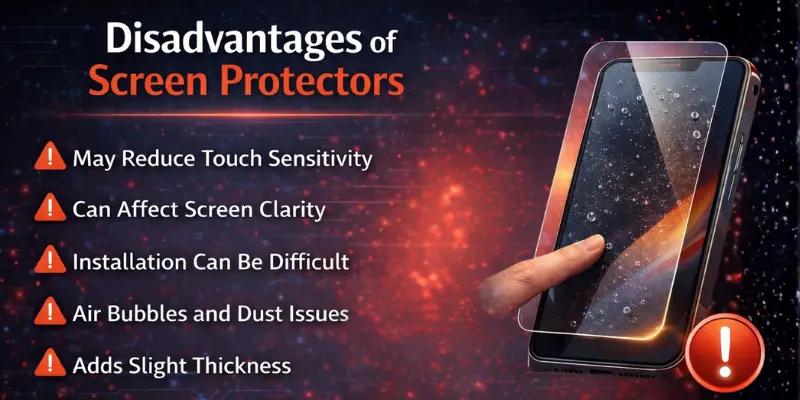
Here are the main cons of screen protectors:
- May Reduce Touch Sensitivity
- Can Affect Screen Clarity
- Installation Can Be Difficult
- Air Bubbles and Dust Issues
- Adds Slight Thickness
- Cheap Protectors Crack Easily
- May Change Original Screen Feel
- Poor Fit on Curved Screens
- Fingerprint Sensor Issues
- Not Always Necessary for Careful Users
Now, let’s discuss each drawback in detail.
May Reduce Touch Sensitivity
Some screen protectors can make the screen feel less responsive. This usually happens with cheap, thick, or badly fitted protectors. Users may notice it more while typing, swiping, or gaming.
- The screen may feel slower to touch.
- Edge swipes may not work as smoothly.
- Low-quality protectors can reduce responsiveness.
Can Affect Screen Clarity
A poor-quality screen protector can change how the display looks. It may reduce sharpness, brightness, or color quality. Some plastic protectors can make the screen look dull or slightly blurry.
- The display may look less clear than usual.
- Colors may appear less bright or vibrant.
- Cheap protectors can reduce the premium look of the screen.
Air Bubbles and Dust Issues
The most common type of problem that can occur is bubbles and dust under the protector itself. The smallest particle of dust will cause it to look unsightly once installed. It will affect the protector’s appearance and practicality.
- Dust particles can become trapped during the protector’s installation.
- Bubbles can form below the protector.
- The whole thing might have to be cleaned off and reapplied.
Adds Slight Thickness
A screen protector adds an extra layer on top of the display. This can slightly change the slim and smooth feel of the phone. Some users do not like this change.
- The phone may not feel as sleek as before.
- The screen surface becomes slightly thicker.
- It can affect the natural feel of the original display.
Cheap Protectors Crack Easily
Low-quality screen protectors often break very quickly. Some may crack from small pressure or light drops. This can lead to extra replacement costs and poor protection.
- Cheap protectors may not last long.
- They can crack more easily than better-quality options.
- Poor durability can make them less useful.
May Change Original Screen Feel
Some users enjoy the smooth feel of the original screen glass. A screen protector can change that feeling. Depending on the material, it may feel less natural or less smooth.
- The screen may not feel the same as the original glass.
- Some protectors feel rough, rubbery, or too slippery.
- Users may miss the natural touch experience.
Poor Fit on Curved Screens
Some phones have curved edges, and not all screen protectors fit them well. The protector may lift at the sides or fail to cover the full display properly. This can reduce both appearance and performance.
- The edges may not stick properly.
- Some protectors leave uncovered areas on curved screens.
- Poor fit can cause lifting or peeling over time.
Fingerprint Sensor Issues
Some phones have under-display fingerprint scanners. Some screen protectors affect the effectiveness of such a sensor. This could slow down or even prevent the device from unlocking.
- The fingerprint scanner will react poorly.
- Some protectors affect the efficiency of the fingerprint scanner.
- One may have to press more.
Not Always Necessary for Careful Users
Not everyone needs a screen protector. Some people are very careful with their phones and rarely drop them. If someone uses a case, handles the phone gently, and does not mind small wear, they may not feel a protector is necessary.
- Careful users may not see much benefit from one.
- Some people prefer the phone without any extra layer.
- It may feel unnecessary for light or cautious use.
Conclusion
So guys, in this article, we’ve covered the pros and cons of screen protectors in detail. Screen protectors are a smart choice if you want to keep your phone safe from scratches and daily wear, especially if you use your device frequently. I personally recommend using a good-quality tempered glass protector for better protection and durability. However, if you prefer the original screen feel and handle your phone carefully, you may skip it.
👉 Now it’s your turn to choose what fits your usage best and make the right decision for your phone.
Frequently Asked Questions (FAQs)
Here are answers to some of the most common questions about the pros and cons of screen protectors:
A screen protector is useful for keeping your phone screen free of scratches and other damage from daily use. The protector provides additional protection for the phone’s display, helping keep it in its original state for a longer period. However, careful users might not always require this.
While the screen protector reduces the likelihood of minor screen damage, it does not provide complete protection against cracks. It can help absorb shock; however, the phone screen may still suffer damage depending on the intensity of the shock.
The best type of screen protector is tempered glass because it offers strong protection and a smooth touch experience. It is more durable than plastic protectors and can absorb minor impacts effectively. For most users, tempered glass provides the best balance between protection, clarity, and usability.
Some screen protectors can reduce touchscreen sensitivity, especially if they are thick or of low quality. Generally, thicker protectors make the screen less responsive to touch. A poorly fitted screen protector can also cause touch issues and affect overall performance.
Cheaper screen protectors may cause your screen to look unclear or blurry, or duller or less bright. Good screen protectors should not affect the quality of the screen at all.



- Be Respectful
- Stay Relevant
- Stay Positive
- True Feedback
- Encourage Discussion
- Avoid Spamming
- No Fake News
- Don't Copy-Paste
- No Personal Attacks
- Be Respectful
- Stay Relevant
- Stay Positive
- True Feedback
- Encourage Discussion
- Avoid Spamming
- No Fake News
- Don't Copy-Paste
- No Personal Attacks
