iPhone vs Samsung: Which Phone Gives Better Overall Value?
Published: 11 Nov 2026
Choosing between an iPhone and a Samsung can be difficult, especially when both brands offer powerful cameras, fast processors, premium displays, and useful AI features. So, which is better, an iPhone or a Samsung?
The answer depends on what you expect from your phone. iPhones are a strong choice for people who prefer iOS, Apple’s connected devices, and advanced video features. Samsung offers more model choices, Android customization, S Pen features, and foldable phones.
In this guide, we’ll compare iPhone vs Samsung in detail and help you decide which phone best suits your needs, preferences, and budget. So, without wasting any time, let’s dive in!
10 Key Differences Between iPhone and Samsung
The biggest differences between iPhone and Samsung is not simply the camera or processor. The two brands offer different software experiences, hardware options, customization features, and connected-device ecosystems.
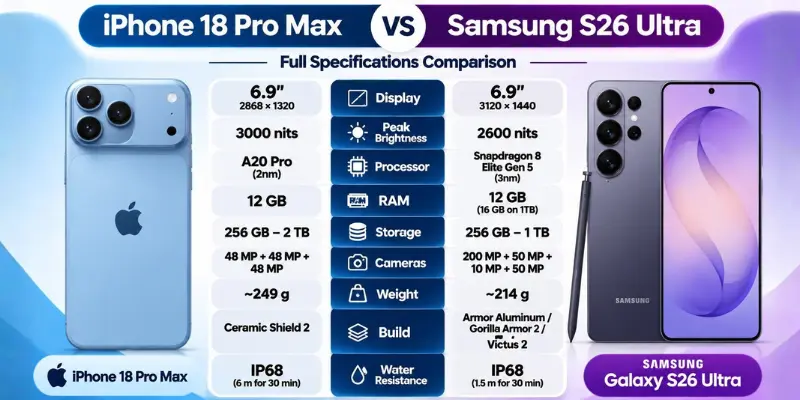
To make the comparison easier, let’s first look at the specifications of Apple’s iPhone 18 Pro Max and Samsung’s Galaxy S26 Ultra, two of the leading flagship smartphones in 2026
Quick Comparison Table: iPhone 18 Pro Max vs Samsung Galaxy S26 Ultra
| Feature | iPhone 18 Pro Max | Samsung Galaxy S26 Ultra |
|---|---|---|
| Display | 6.9-inch Super Retina XDR OLED, 2868 × 1320 | 6.9-inch Dynamic AMOLED 2X, 3120 × 1440 |
| Processor | Apple A20 Pro | Snapdragon 8 Elite Gen 5 for Galaxy |
| RAM | 12GB | 12GB (16GB on 1TB model) |
| Storage | 256GB, 512GB, 1TB, 2TB | 256GB, 512GB, 1TB |
| Main Camera | 48MP with variable aperture | 200MP, f/1.4 |
| Other Rear Cameras | 48MP ultra-wide, 48MP telephoto | 50MP ultra-wide, 10MP 3x telephoto, 50MP 5x telephoto |
| Front Camera | 18MP | 12MP |
| Battery Capacity | 5,391mAh (physical SIM); 5,567mAh (eSIM-only) | 5,000mAh |
| Wired Charging | Up to 50% in around 15 minutes with a compatible 60W or higher adapter | Up to 75% in around 30 minutes with a 60W adapter |
| Wireless Charging | Up to 25W MagSafe / Qi2 | Up to 25W wireless charging |
| Software | iOS 27 | Android 17 with One UI 9 |
| Weight | 249g | 214g |
| US Starting Price | $1,299 | $1,399.99 |
| Release Date | September 2026 | March 2026 |
Now, let’s look at the differences that matter most when using these phones every day.
1. Operating System: iOS vs Android
One of the biggest differences between an iPhone and a Samsung Galaxy phone is the operating system. Apple uses iOS, while Samsung Galaxy smartphones run on Android with Samsung’s One UI interface.
iOS is known for its simple design and consistent user experience. Its menus, settings, and built-in apps follow Apple’s familiar design, making it relatively easy to learn and navigate. If you’ve already used an iPad or Mac, you’ll also find it easier to connect your iPhone with other Apple devices.
Samsung’s Android experience offers more customization and flexibility. You can personalize your home screen, change themes and icons, install different launchers, and adjust various settings to suit your preferences. One UI also includes useful multitasking features that let you work with multiple apps more conveniently.
Both operating systems offer useful features, but the better choice depends on your preferences. If you want a simple, consistent interface, an iPhone may suit you better. However, if you enjoy customizing your phone and having more control over its features, Samsung is worth considering.
You may also Like these Posts
➡️Pros & Cons of Android OS – Know Before Buying a Phone
➡️Top 10 Pros & Cons of iPhone
2. Design and Build Quality
Both Apple and Samsung use premium materials in their flagship smartphones, but they differ in design, weight, and overall feel.
The iPhone 18 Pro Max features an aluminum unibody design with Ceramic Shield 2 on the front and Ceramic Shield on the back. Its flat edges and smooth finish give it a premium appearance. However, at 249 grams, it feels relatively heavy, especially when using it for long periods.
The Samsung Galaxy S26 Ultra features an Armor Aluminum frame, Gorilla Armor 2 on the front, and Gorilla Glass Victus 2 on the back. It has a modern design with rounded corners and a refined camera layout. Its weight is around 214 grams, making it approximately 35 grams lighter than the iPhone and potentially more comfortable to carry and hold for longer periods.
Both phones also offer IP68 water and dust resistance. However, their water-resistance ratings differ: Apple claims protection at up to 6 meters for 30 minutes, while Samsung specifies up to 1.5 meters for the same duration.
Overall, both offer premium build quality. The iPhone may appeal to those who prefer Apple’s distinctive design, while Samsung is a good choice if you want a lighter phone with a modern appearance.

3. Display Quality and Screen Technology
A good display makes a difference when watching movies, playing games, reading, or scrolling through social media.
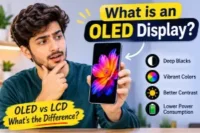
Apple uses a 6.9-inch Super Retina XDR OLED display in the iPhone 18 Pro Max. It supports ProMotion technology with an adaptive refresh rate of up to 120Hz. It offers vibrant colors, sharp details, and up to 3,000 nits of peak outdoor brightness, making the screen easier to see in bright sunlight.
Samsung uses a 6.9-inch Dynamic AMOLED 2X display in the Galaxy S26 Ultra. It offers QHD+ resolution for sharp images, an adaptive refresh rate of up to 120Hz for smooth scrolling, and up to 2,600 nits of peak brightness.
One interesting Samsung feature is its built-in Privacy Display. It can limit what people viewing the screen from the sides can see when the feature is activated. This can be useful when checking private information in public places.
Overall, both phones offer excellent displays. The iPhone has a higher advertised peak brightness, while Samsung stands out with its higher resolution and built-in Privacy Display. The better choice depends on which features matter most to you.
You may also Like these Posts
➡️POLED vs AMOLED: Full Comparison Guide for Buyers
4. Camera Quality and Photography
Camera quality is an important factor when choosing between an iPhone and Samsung, especially if you enjoy taking photos, recording videos, or creating social media content. Both phones offer advanced camera systems, but they have different strengths.
The iPhone 18 Pro Max features a triple 48MP rear camera system with a main camera, ultra-wide camera, and 4x telephoto camera. Its variable aperture helps control how much light enters the lens, while the 18MP Center Stage front camera is useful for selfies and video calls.
The Samsung Galaxy S26 Ultra comes with a quad-camera system featuring a 200MP main camera, a 50MP ultra-wide camera, a 10MP 3x telephoto camera, and a 50MP 5x periscope telephoto camera. Its multiple zoom options make it useful for capturing distant subjects and detailed photographs.
Both phones deliver excellent photography, but their results can differ in color, contrast, and low-light performance. Samsung offers more flexibility for zoom photography, while the iPhone provides advanced video features, including 4K Dolby Vision and ProRes recording. Samsung also supports video recording up to 8K at 30fps.
Overall, the iPhone is a strong choice for video recording and selfies, while Samsung stands out for zoom photography and camera versatility. The better option depends on your photography needs.
5. Performance and Gaming
Performance affects how quickly a phone opens applications, handles demanding tasks, edits videos, and runs games.
The iPhone 18 Pro Max uses Apple’s A20 Pro processor. Apple designs its chips specifically for its devices and operating system, allowing the hardware and software to work closely together.
Samsung’s Galaxy S26 Ultra uses the Snapdragon 8 Elite Gen 5. It is designed to handle demanding applications, graphics, multitasking, and AI-related workloads.
Both phones are powerful enough for popular mobile games and everyday multitasking. Independent benchmark testing has shown strong performance from both devices, although the iPhone has recorded higher results in several CPU and graphics tests.
However, benchmark numbers don’t tell the whole story. Gaming performance also depends on game optimization, temperature, graphics settings, and how consistently a phone maintains performance during longer sessions.
If gaming is your main priority, check performance tests for the specific games you play rather than selecting a phone just based on its processor name.
6. Battery Life and Charging Speed
Battery life is important when choosing a smartphone, especially if you spend long hours browsing, gaming, watching videos, or using social media.
The iPhone 18 Pro Max offers a larger battery than previous generations, with a capacity of 5,391mAh in the physical SIM version. Apple also supports fast charging, allowing the phone to reach around 50% charge in 15 minutes with a compatible 60W or higher adapter.
The Samsung Galaxy S26 Ultra comes with a 5,000mAh battery and supports 60W wired fast charging. It also offers 25W wireless charging, making it convenient to recharge without connecting a cable.
In an independent battery test by Tom’s Guide, the iPhone 18 Pro Max lasted 18 hours and 27 minutes, while the Galaxy S26 Ultra lasted 16 hours and 40 minutes during continuous 5G web browsing at the same screen brightness. Samsung, however, can recharge faster in some independent full-charging tests.
Overall, the iPhone 18 Pro Max offers longer battery life in these tests, while Samsung provides faster full charging in some testing conditions. If you frequently use your phone throughout the day, the iPhone has an advantage in battery life.
7. Customization and Multitasking
Samsung and Apple take different approaches to customization.
Samsung gives users more control over their home screens, icons, themes, widgets, default apps, and interface settings. Selected Galaxy devices also support split-screen applications, floating windows, and Samsung DeX for a more desktop-like experience.
The Galaxy S26 Ultra also includes an S Pen, which can be useful for writing notes, marking documents, sketching, and working with compatible applications.
Apple has gradually added more customization options to iOS, including widgets, home-screen layouts, and additional controls. However, the overall experience remains more controlled than Android.
If you like personalizing your phone or frequently use multiple applications at once, Samsung provides more flexibility. If you prefer Apple’s more consistent interface, the iPhone may feel more comfortable.
8. AI Features and Smart Technology
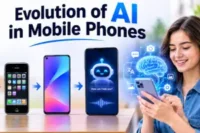
Artificial intelligence is becoming an important part of modern smartphones. Both Apple and Samsung offer AI tools that help users edit photos, write messages, translate languages, and complete everyday tasks.
The iPhone 18 Pro Max supports Apple Intelligence, offering features such as Writing Tools, Genmoji, Image Playground, and AI-powered photo editing. These tools make writing, communication, and photo editing easier.
The Samsung Galaxy S26 Ultra offers Galaxy AI features such as Photo Assist, Interpreter, and Now Nudge. Users can edit photos with text prompts, translate conversations, and get helpful suggestions for everyday tasks.
Overall, Apple focuses on integrating AI into its apps and ecosystem, while Samsung offers a wider range of practical AI tools. The better choice depends on which features you find more useful. Availability may vary by language and region.
9. Privacy, Security and Software Updates
Your smartphone contains personal photographs, financial applications, messages, contacts, and other sensitive information. Security should therefore be an important part of your buying decision.
Apple uses security technologies built into its hardware and iOS software. Features such as Face ID, Secure Enclave, app permissions, and privacy controls help protect your personal information. Face ID data is encrypted and protected by the Secure Enclave, keeping it private on your device rather than sharing it with apps or Apple
Samsung uses Samsung Knox and Knox Vault, along with Android security features, to protect personal information. Its security tools include Auto Blocker, Theft Protection, and additional hardware-based protection for sensitive data.
Software support is another important consideration. Samsung promises seven generations of operating system upgrades and seven years of security updates for the Galaxy S26 series. Apple also provides iOS updates to older iPhone models for several years, although the exact support period can vary by model.
Overall, both brands offer strong security features and regular software updates. However, no smartphone is fully protected against harmful software, phishing, or unsafe user behaviour.

10. Price, Resale Value and Overall Value
Price is another important factor when choosing between an iPhone and Samsung. Both brands offer premium flagship phones, but their prices, resale values, and overall benefits can differ.
The iPhone 18 Pro Max starts at $1,299 in the US, while the Samsung Galaxy S26 Ultra has a listed starting price of $1,399.99 before discounts. However, prices can vary by country, storage, retailer, and promotions.
Resale value is another area where Apple has an advantage. iPhones generally retain their value better than Samsung Galaxy flagship phones, making them a good option if you plan to sell or upgrade your phone after a year or two. Samsung phones can also offer good resale value, but their prices often drop faster in the used-phone market.
Samsung also offers a wider range of smartphones at different prices, giving buyers more options to choose from. Apple has a more focused iPhone lineup, with different models and storage options to suit various budgets.
Overall, the iPhone may be a better choice if you care about resale value and plan to upgrade regularly. Samsung is worth considering if you want more hardware features, customization, and discounts. The best value ultimately depends on your budget, preferences, and how long you plan to keep your phone.
Why Is Samsung Better Than iPhone? 10 Reasons
Samsung offers several advantages over the iPhone, especially for people who want more customization, flexible features, and greater control over their smartphones. Here are 10 reasons why Samsung might be a better choice than an iPhone.
- More Customization Options: Samsung gives users more freedom to personalize their phones. You can change themes, icons, widgets, home-screen layouts, and even install different launchers according to your preferences.
- Built-in S Pen: The Galaxy S26 Ultra comes with a built-in S Pen for taking notes, drawing, editing documents, and writing directly on the screen. It’s especially useful for students and professionals.
- Better Multitasking Features: Samsung supports split-screen apps and floating windows, allowing you to use multiple applications at the same time, such as watching videos while taking notes or checking messages while browsing.
- Samsung DeX: Samsung DeX allows you to connect your compatible Galaxy phone to an external monitor and use a desktop-like interface. You can manage files, open multiple applications, and work with a keyboard and mouse.
- More Flexible Camera Zoom: The Galaxy S26 Ultra offers dedicated 3x and 5x optical telephoto cameras for capturing distant subjects. Its 200MP main camera also provides detailed photographs and greater photography flexibility.
- Higher Display Resolution: The Galaxy S26 Ultra features a QHD+ display with a resolution of 3120 × 1440 pixels, compared with the iPhone 18 Pro Max’s 2868 × 1320 resolution. This provides sharp details when watching videos, reading, or browsing.
- Built-in Privacy Display: The Galaxy S26 Ultra includes a Privacy Display that limits screen visibility from side angles when activated. This helps protect private messages and sensitive information when using your phone in public places.
- Useful Galaxy AI Features: Samsung offers Galaxy AI tools such as Photo Assist, Now Nudge, and Creative Studio. These features help users edit pictures, create content, and get useful suggestions for everyday tasks.
- More Foldable Phone Options: Samsung offers foldable smartphones such as the Galaxy Z Fold8 Ultra and Galaxy Z Flip8. These provide larger displays for multitasking or compact designs that are easier to carry.
- More Options for Different Budgets: Samsung offers smartphones across its Galaxy A, S, and Z series. Buyers can choose from affordable everyday phones, premium flagships, and foldable devices according to their budgets and requirements.
Samsung isn’t automatically better in every category, but these features make it an appealing choice for users who value flexibility and additional hardware options.
Why Is the iPhone Better Than Samsung? 10 Reasons
The iPhone offers several advantages over Samsung, especially for people who prefer a simple software experience, strong video recording, and easy connectivity with other Apple devices. Here are 10 reasons why an iPhone might be a better choice.
- Simple and Easy-to-Use Software: iOS offers a clean and consistent interface that is easy to navigate. Its settings, menus, and built-in apps follow a familiar design, making it a good choice for users who prefer a straightforward smartphone experience.
- Better Apple Ecosystem: iPhones work smoothly with other Apple devices, including MacBooks, iPads, Apple Watches, and AirPods. Features such as AirDrop, Handoff, and Universal Clipboard make sharing files and switching between devices easier.
- Advanced Video Recording: The iPhone 18 Pro Max supports 4K Dolby Vision and ProRes video recording. These features make it a strong choice for YouTubers, filmmakers, and content creators who want high-quality videos and more editing flexibility.
- Advanced Camera Controls: The iPhone 18 Pro Max features a 48MP camera system with variable aperture and manual camera controls. These features give photographers more control over lighting, depth of field, and the overall look of their pictures.
- Powerful Performance: Apple’s A20 Pro chip delivers fast performance for demanding applications, mobile gaming, video editing, and multitasking. Its close integration with iOS also helps provide a smooth overall experience.
- Strong Battery Life: The iPhone 18 Pro Max offers impressive battery performance. In Tom’s Guide’s battery test, it lasted 18 hours and 27 minutes, outperforming the Galaxy S26 Ultra in the same test.
- Strong Privacy and Security: Apple includes security features such as Face ID, Secure Enclave, and app privacy controls. These technologies help protect personal information and keep sensitive data secure.
- Better Resale Value: iPhones generally retain more of their value than Samsung flagship phones. This makes them a good option if you plan to sell your phone or upgrade to a newer model after a year or two.
- Regular Software Updates: Apple regularly provides iOS updates to supported iPhone models, bringing new features, improvements, and security fixes. This helps users keep their devices updated without upgrading every year.
- MagSafe and Accessory Support: The iPhone supports MagSafe accessories, including wireless chargers, cases, wallets, and stands. Its magnetic connection makes attaching compatible accessories simple and convenient.
These advantages make the iPhone particularly appealing to users who already own Apple devices, regularly create videos, or plan to upgrade their phones while maintaining good resale value.
Foldable Phones: iPhone Duo vs Samsung Galaxy Z Fold8 Ultra
If you want a foldable smartphone instead of a traditional flagship, Apple and Samsung offer two premium options worth considering. Both phones provide large folding displays, powerful processors, and features designed for multitasking, entertainment, and everyday use.
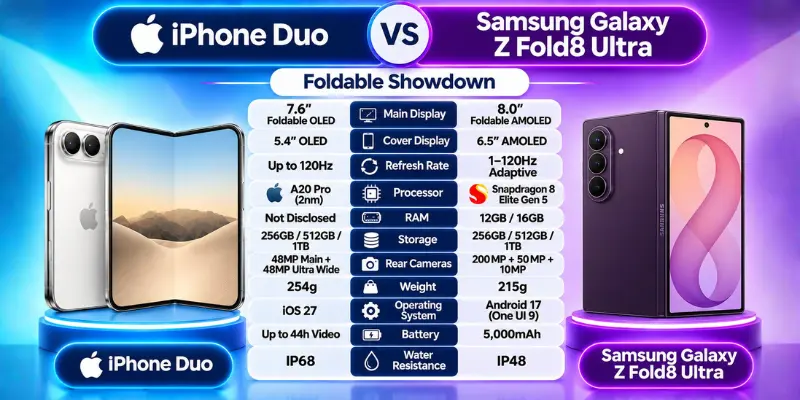
The iPhone Duo features a 7.6-inch inner OLED display and a 5.4-inch outer display. It is powered by Apple’s A20 Pro chip and runs iOS 27. Its titanium design, improved hinge, and Apple ecosystem make it an interesting option for users who prefer Apple’s software experience.
The Samsung Galaxy Z Fold8 Ultra features a larger 8-inch inner display and a 6.5-inch cover display. It comes with a 200MP main camera, a 5,000mAh battery, and Samsung’s Android-based One UI 9 software. Its multitasking tools, including side-by-side apps and multiple windows, make it useful for productivity.
In terms of pricing, the iPhone Duo starts at $1,999 in the US, while the Galaxy Z Fold8 Ultra starts at $2,099.99 for the 256GB configuration.
Overall, choose the iPhone Duo if you prefer Apple’s ecosystem, iOS experience, and a familiar interface in a foldable design. Consider the Galaxy Z Fold8 Ultra if you want a larger inner display, more multitasking flexibility, and Samsung’s productivity features. Both are expensive devices, so consider their durability, software experience, and everyday performance before making your decision.
Which Should You Choose: iPhone or Samsung?
Choosing between an iPhone and Samsung depends on your personal preferences, daily usage, and budget. Both brands offer excellent smartphones, but each may suit different types of users.
Choose an iPhone if:
- You prefer a simple and consistent smartphone experience.
- You already use Apple devices such as a MacBook, iPad, or Apple Watch.
- You regularly create videos and want advanced recording features.
- You plan to upgrade your phone regularly and care about resale value.
Choose Samsung if:
- You enjoy customizing your phone and controlling its settings.
- You frequently multitask and use productivity features.
- You want more flexibility in camera zoom and smartphone design.
- You prefer having more models and price options to choose from.
Which Phone Is Better for Different Types of Users?
The best smartphone also depends on your daily activities. Let’s look at which brand may suit different users.
- For Students: Students who regularly take notes, read documents, attend online classes, and manage assignments may find Samsung useful, especially the Galaxy S26 Ultra with its built-in S Pen. iPhones are also a good choice for students who use MacBooks or iPads and want easy file sharing through AirDrop.
- For Gamers: Gamers who enjoy playing demanding mobile games can consider either brand. Both offer powerful processors and high-refresh-rate displays. The iPhone may appeal to users who prefer iOS gaming, while Samsung provides more Android gaming options and customization. Battery life and heat management are also worth considering.
- For Content Creators and YouTubers: Content creators who regularly record videos for YouTube, TikTok, or Instagram may prefer the iPhone because of its advanced video recording features. Samsung is also a good option for creators who want flexible camera zoom, editing tools, and more control over their smartphone.
- For Photographers and Social Media Users: People who regularly take pictures and share content on social media may prefer Samsung for its dedicated telephoto cameras and zoom flexibility. The iPhone is also suitable for users who prefer Apple’s photo processing and video recording experience. Both can produce excellent content for social media platforms.
- For Professionals and Business Owners: Professionals who manage emails, documents, meetings, and multiple applications may find Samsung useful because of features such as DeX, split-screen apps, and floating windows. The iPhone is a good choice for those who already use Apple devices and want convenient connectivity between their work devices.
- For Everyday Users and Families: People who mainly use their phones for messaging, browsing, online shopping, video calls, and watching movies can choose either brand. The iPhone offers a straightforward experience, while Samsung provides more customization and different device options.
- For Budget-Conscious Buyers: Buyers looking for a smartphone that fits their budget may find Samsung more suitable because its Galaxy A, S, and Z series cover different price categories. However, older iPhone models and refurbished iPhones are also worth considering for those who want Apple’s software experience at a lower price.
Here is a quick comparison to help you choose the right phone according to your priorities.
| User Type | Suitable Choice | Main Reason |
|---|---|---|
| Students | Both | S Pen or Apple ecosystem |
| Gamers | Both | Strong flagship performance |
| Video Creators | iPhone | Advanced video recording |
| Photographers Who Need Zoom | Samsung | Dedicated telephoto cameras |
| Business Professionals | Both | DeX or Apple ecosystem |
| Customization Lovers | Samsung | More control over settings |
| Everyday Users | Both | Good everyday performance |
| Budget-Conscious Buyers | Samsung | More models across budgets |
| Apple Device Owners | iPhone | Seamless device connectivity |
| Multitasking Users | Samsung | Split-screen and DeX |
Use this comparison as a starting point, but consider your budget, preferred features, and the specific models before making your final decision.
Common Myths About Samsung and iPhone
There are many myths about iPhone and Samsung that can make choosing a phone harder. Let’s clear up these misunderstandings so you can buy with confidence!.
Myth 1: “iPhones Can’t Get Viruses”
The Truth: iPhones are harder to attack because iOS is a closed system and apps are reviewed before they reach the App Store. But they are not immune. Phishing links, fake messages and spyware can still target an iPhone, so keep it updated and be careful what you tap.
Myth 2: “Android Phones Are Less Secure Than iPhones”
The Truth: Security on any Android phone depends mostly on updates and your habits. Samsung promises seven years of security updates for the Galaxy S26 series and adds its own security layer called Knox. Most problems on any phone come from shady apps and links, not from the brand.
Myth 3: “Samsung Phones Slow Down After a Year”
The Truth: A modern Galaxy flagship has 12 GB of RAM and a very fast chip. Slowdowns usually come from nearly full storage, an old battery, or too many apps running in the background. Clearing space and updating the phone fixes most of it, on any brand.
Myth 4: “iPhones Are Always More Expensive”
The Truth: Not necessarily. Premium iPhones and Samsung flagship phones can have similar prices. However, Samsung offers more affordable options through its Galaxy A series, giving buyers more choices across different budgets.
Myth 5: “The iPhone Always Has the Better Camera”
The Truth: It depends on what you shoot. iPhones are great for steady video and natural colors. Samsung is stronger for zoom, thanks to its 3x and 5x telephoto lenses. Test both with the kind of photos you take most.
Myth 6: “More Megapixels Means Better Photos”
The Truth: Samsung’s main camera is 200 MP and Apple’s is 48 MP, yet both take excellent photos. Sensor size, lens quality and software processing matter more than the megapixel number.
Myth 7: “Samsung Phones Are Too Complicated”
The Truth: One UI works well straight out of the box. The extra settings are there if you want them, but you can ignore them and use the phone like any other.
Myth 8: “Switching Between iPhone and Samsung Is Difficult”
The Truth: Switching is easier than many people expect. Apple’s Move to iOS and Samsung’s Smart Switch can transfer supported data, including contacts, photos, videos, and messages. However, some apps and settings may need manual setup, and Apple Watch cannot be paired with Samsung phones.
Conclusion
So, iPhone vs Samsung: which is better? Both brands offer excellent smartphones, but they are designed around different user preferences. iPhones are worth considering for their iOS experience, Apple ecosystem, and advanced video features. Samsung is a strong alternative for people who want more customization, additional camera zoom options, S Pen support, and foldable designs.
Before choosing either brand, compare the specific models rather than relying only on their names. Think about your budget, the features you use every day, and how long you plan to keep your phone. Once you understand those priorities, choosing between an iPhone and Samsung becomes much easier.
Frequently Asked Questions (FAQs)
Here are answers to some of the most common questions about Samsung vs iPhone:
Many people prefer iPhones because of their simple interface, smooth performance, Apple ecosystem, and long-term software support. Features like AirDrop, iMessage, and FaceTime also make iPhones appealing to people who use other Apple devices.
Both iPhone and Samsung offer excellent smartphones, but the better choice depends on your needs. iPhones are known for their smooth iOS experience and Apple ecosystem, while Samsung offers more customization, flexible features, and different phone options. Compare specific models before making a decision.
Samsung can be a better choice for users who want more customization, advanced camera zoom, S Pen support on compatible models, and foldable phone designs. It also offers smartphones at different price levels, making it easier to find a device that fits your budget.
An iPhone offers Apple-exclusive features such as FaceTime, iMessage, and AirDrop within the Apple ecosystem. Samsung has alternative features for messaging, video calls, and file sharing, but it cannot provide the same native Apple ecosystem experience.
Both iPhone and Samsung are among the most popular smartphone brands worldwide. Their popularity varies by country and market. Apple has a strong following in some markets, while Samsung has a broad customer base across different price ranges.
Both can handle demanding mobile games. The iPhone 18 Pro Max offers strong A20 Pro graphics performance, while the Galaxy S26 Ultra combines a powerful Snapdragon processor with a high-refresh-rate display and Android gaming options. Game optimization, heat management, and long-term performance matter more than the brand name alone.
Switching from Samsung to iPhone may be a good decision if you prefer iOS, use other Apple devices, or want to experience Apple’s exclusive features. However, if you enjoy Android customization, Samsung-specific features, or the S Pen, staying with Samsung may suit you better.
Samsung generally offers more budget-friendly smartphone options because its lineup includes entry-level, mid-range, and flagship devices. Apple mainly focuses on premium smartphones, although older iPhone models can sometimes be more affordable. Always compare the prices of specific models before buying.

- Be Respectful
- Stay Relevant
- Stay Positive
- True Feedback
- Encourage Discussion
- Avoid Spamming
- No Fake News
- Don't Copy-Paste
- No Personal Attacks
- Be Respectful
- Stay Relevant
- Stay Positive
- True Feedback
- Encourage Discussion
- Avoid Spamming
- No Fake News
- Don't Copy-Paste
- No Personal Attacks
