Pros and Cons of iPhones in 2026: A Guide Before You Buy
Published: 14 Apr 2026
Choosing an iPhone in 2026 can be confusing. Apple releases many models every year, each with faster processors, better cameras, and new features. Are you a student looking for long battery life, a professional seeking speed and security, or someone who just wants a smooth, reliable phone?
iPhones are known for their powerful performance, excellent cameras, and secure system. But they also come with high prices, limited customization, and extra hidden costs.
In this blog post, you’ll discover the real pros and cons of iPhones, along with hidden costs, so you can make a smart decision.
10 Pros of iPhones
iPhones help us in many ways in our daily lives. They make communication, work, entertainment, and learning very easy. Let’s look at the main advantages of using an iPhone in 2026.
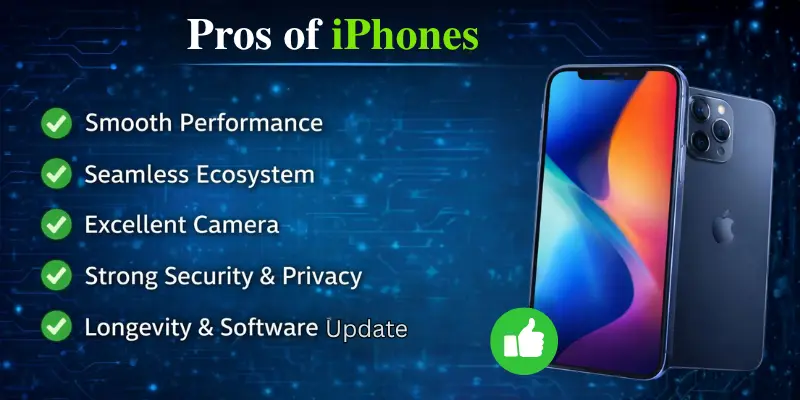
- Smooth Performance
- Seamless Ecosystem
- Excellent Camera
- Strong Security & Privacy
- Longevity & Software Updates
- Easy-to-Use Interface
- Health & Fitness Support
- Apple Pay & Online Payments
- GPS & Navigation
- Learning & Productivity Apps
Now, let’s explore 10 benefits of iPhones in detail.
1. Smooth Performance
The processing speeds on iPhones have been greatly improved by the use of Apple’s A-series processors. It does not matter whether the users are playing video games, multitasking with several applications or performing any other functions on their phones because everything will be done seamlessly.
Some common advantages of seamless performance include:
- Fast Multitasking: Open multiple apps without lag.
- Gaming: High-quality games run smoothly.
- Editing: Efficient and fast document/video editing capabilities.
- Reliable Experience: Consistency during everyday activities
2. Seamless Ecosystem
The compatibility of iPhones with other Apple products such as Mac, iPad, and Apple Watch is unmatched. All applications work seamlessly, enabling users to perform various tasks without any difficulty.
Some common advantages of a seamless Ecosystem include:
- Document Continuity: Start on Mac, continue on iPhone via iCloud.
- File Sharing: Share photos and files instantly with AirDrop.
- Syncing: Messages and calls sync across devices.
- Convenience: Everything works together smoothly.
3. Excellent Camera
The iPhone’s camera is outstanding when taking photos or videos. It offers the best experience for beginners and professionals. The camera helps in capturing memories or professional images without any additional equipment.
Some of the common advantages of the camera include:
- Night Mode: Bright photos even in low light.
- Cinematic Videos: Professional-looking video recording.
- AI Enhancements: Automatic improvements to images.
- User-Friendly Interface: Easy to take and edit photos.
4. Strong Security & Privacy
iPhone uses advanced technologies like Face ID, App Tracking Transparency, and others for securing personal data. Hence, iPhones are one of the most secure phones available for both private and business purposes.
Some of the common advantages of security and privacy include:
- Face Unlock: Quick and safe access to your phone.
- Privacy Controls: Stop apps from tracking your activity.
- Secure Storage: Keep passwords and files safe.
- Peace of Mind: Safe for personal and work data.
5. Longevity & Software Updates
iPhones get software updates for 5–7 years, keeping devices secure and fast. This long-term support makes iPhones a good investment for users who want a phone that lasts.
Some common benefits of longevity and updates are:
- Latest iOS: Always up to date.
- App Compatibility: Run new apps easily.
- High Resale Value: Keep the phone worth longer.
- Long-Term Investment: Works well for many years.
6. Easy-to-Use Interface
The iPhone interface is simple, intuitive, and beginner-friendly. Even if it’s your first smartphone, you can learn to use it quickly.
Some common benefits of the interface are:
- Simple Navigation: Easy for new users.
- Optimized Apps: Smooth performance across apps.
- Consistent Experience: Same interface across all iPhones.
- User Comfort: Easy to learn and use daily.
7. Health & Fitness Support
iPhones track health and fitness through built-in apps and Apple Watch integration. They make staying active and monitoring your health simple and convenient.
Some common benefits of health support are:
- Step Tracking: Monitor daily steps.
- Heart & Sleep Monitoring: Keep track of health.
- Workout Tracking: Record exercises and progress.
- Motivation: Reminders to stay active.
8. Apple Pay & Online Payments
The iPhone makes payment quick, safe, and easy. You can do shopping or pay bills using iPhones without having to bring along cash and credit/debit cards.
Some advantages of Apple Pay include:
- Quick Payments: Make payments without cash.
- Send Money Easily: Send money to friends securely.
- Safe Transactions: Face ID or Touch ID ensures secure payment.
- Convenience: No need for a card or cash.
9. GPS & Navigation
The iPhone provides GPS and navigation services. It guides users from their current location to the destination safely.
Some common benefits of GPS and navigation are:
- Find Directions: Driving, walking, or cycling.
- Nearby Search: Restaurant, Shopping Malls, Gas Stations.
- Share Location: Let friends and family know where you are.
- Safe Travel: Useful when traveling or in an emergency situation.
10. Learning & Productivity Apps
iPhones support learning, productivity, and organization anywhere. They are perfect for students, professionals, or anyone who wants to stay organized on the go.
Some common benefits of learning and productivity apps are:
- Educational Apps: Access apps like Khan Academy.
- Tutorials & Notes: Watch videos or read documents.
- Task Management: Use calendars, reminders, and notes.
- Work Anywhere: Study or complete tasks on the go.
10 Cons of iPhones
iPhones are powerful and popular, but they also have some drawbacks that buyers should know before buying. From high prices to limited customization, here are the 10 main disadvantages of iPhones in 2026:
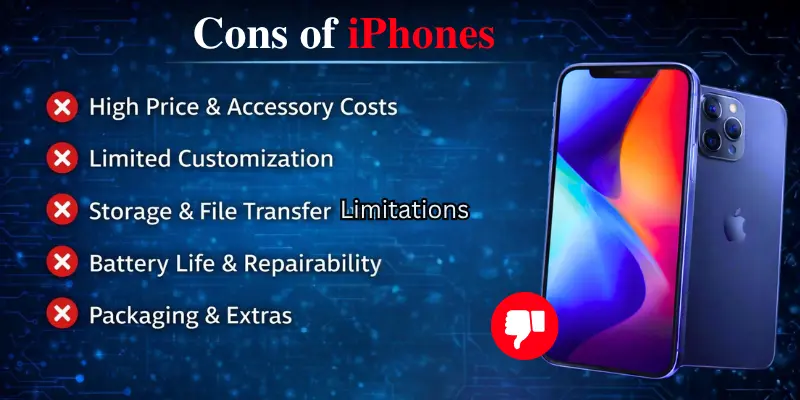
- High Price & Accessory Costs
- Limited Customization
- Storage & File Transfer Limitations
- Battery Life & Repairability
- Packaging & Extras
- Limited Compatibility
- Fragile Build
- Limited Ports & Headphone Options
- High Repair & Service Costs
- Learning Curve for Beginners
Now, let’s discuss the disadvantages of iPhones in detail.
1. High Price & Accessory Costs
iPhones are very expensive, and buying accessories like chargers, cases, or headphones adds more cost. This can make owning an iPhone costly for many users.
Some common problems caused by high prices and accessory costs are:
- Expensive Purchase: The high upfront cost makes it hard for budget users.
- Extra Accessory Costs: Chargers, cases, and headphones cost extra.
- Repair Costs: Repairs outside warranty can be very costly.
- Frequent Spending: Upgrading or replacing accessories adds more expenses.
2. Limited Customization
iPhones do not allow much personal customization. You cannot change default apps or use custom themes, which can feel restrictive.
Some common problems caused by limited customization are:
- Fixed Home Screen: Cannot freely arrange apps or widgets.
- Default Apps Locked: Cannot replace some default apps easily.
- Theme Restrictions: Custom themes or launchers are not supported.
- Limited Personalization: Fewer ways to make the phone unique.
3. Storage & File Transfer Limitations
The iPhone is equipped with pre-determined storage options and does not have a memory card slot for expanding storage. Transfer of files from one phone to another may prove to be tough work.
Some common issues arising due to the limitations of storage and file transferring include:
- Limited Storage: Must choose storage size when buying.
- Cloud Dependency: Need to transfer files to the cloud.
- Slow Transfers: Transferring files can be slow.
- Compatibility Issues: Hard to share files with Android or Windows.
4. Battery Life & Repairability
The battery life of iPhones tends to drain quickly, and their repairs are costly too.
Some common problems arising from batteries and repairs are:
- Quick Battery Drain: Gaming or heavy apps reduce battery life fast.
- High Replacement Costs: Battery replacement is expensive.
- Limited DIY Repairs: Repairs often need Apple-certified service.
5. Packaging & Extras
iPhones now include fewer accessories in the box. You often need to buy chargers, headphones, or other extras separately.
Some common problems caused by packaging and extras are:
- Missing Accessories: Chargers or earbuds may not be included.
- Extra Expenses: Need to buy additional items separately.
- Unexpected Costs: Accessories can be pricey.
- Planning Required: Must check what comes in the box before buying.
6. Limited Compatibility
iPhones work best with Apple devices. Using them with Android or Windows devices can limit features.
Some common problems caused by limited compatibility are:
- Apple Ecosystem Only: AirDrop and Handoff don’t work outside Apple.
- App Restrictions: Some apps are iOS-only.
- File Sharing Problems: Moving files to other systems is tricky.
- Accessory Limits: Some accessories work only with Apple products.
7. Fragile Build
The iPhones are built using glass and metal; hence, they are very fragile. Dropping them might easily break their structure.
Some of the common problems that arise because of a fragile build include:
- Cracked Screen: The screen can easily crack when dropped.
- Back Panel Damage: The replacement of a glass back cover is costly.
- Need for Cases: They need to use a phone case in order not to be damaged.
8. Limited Ports & Headphone Options
Most iPhones lack a headphone jack, and older models use the Lightning port, which limits compatibility with many accessories. However, newer iPhones now come with a USB-C port, improving compatibility, but the overall limitations still exist for many users. An adapter is often required when using wired earphones or certain accessories.
Common problems brought about by port incompatibility include:
- Adapter Needed: The wired earphones need additional adapters.
- Simultaneous Charging Issues: Charging becomes difficult while using wired headphones.
- Extra Cost: Wireless headphones like AirPods add expense.
- Limited Options: Fewer built-in options compared to some Android devices.
9. High Repair & Service Costs
Repairing iPhones is often more expensive than other phones. Only certified centers can fix many issues.
Some common problems caused by repair costs are:
- Expensive Repairs: Screen, battery, or camera fixes cost a lot.
- Warranty Restrictions: Third-party repairs may void warranty.
- Time-Consuming: Repairs take time and effort.
- Unexpected Expenses: Minor damages can lead to high costs.
10. Learning Curve for Beginners
iPhones are easy to use once you get familiar with them, but they can feel confusing for new users, especially those switching from Android.
Common issues include:
- Different System: iOS works differently from Android.
- Gesture Learning: New users need time to learn gestures and shortcuts.
- Feature Discovery: Some features are not easy to find at first.
- Adjustment Time: It takes time to get used to the system.
iPhone vs Android – Which One Should You Choose?
Choosing between an iPhone and an Android in 2026 isn’t just about price. It’s about long-term value, features, and your personal needs. iPhone users often mention smooth updates and Mac integration. Android fans highlight customization and lower repair costs.
Key Pros & Cons Summary
| Feature | iPhone | Android | Notes / Insights |
|---|---|---|---|
| Cost | Premium | Budget to flagship | Android phones are cheaper at the start, while iPhones offer better long-term value |
| Updates | 5–7 years | 2–4 years | iPhones get updates for a longer time, keeping them secure and up to date |
| Customization | Limited | Highly customizable | Android is better if you like changing themes and settings |
| App Ecosystem | Well-optimized | Varies | Apps usually run smoother and more consistently on iPhones |
| Security | Strong & regular | Varies | iPhones are generally more secure for personal and work data |
| Resale Value | High | Lower | iPhones keep their value better over time |
| User Opinions | Smooth & reliable | Flexible & affordable | iPhone users prefer stability, Android users like freedom and lower costs |
Hidden Costs of iPhones Most Buyers Ignore
Buying an iPhone isn’t just about the price on the box. Accessories, iCloud storage, repairs, and insurance can add up.
Some common hidden costs are:
- Accessories: Cases, chargers, AirPods, MagSafe — $50–$300.
- iCloud Storage: 50GB–2TB plans cost $0.99–$9.99/month.
- Repair Costs: Screen, battery, or water damage repairs are expensive.
- Insurance & Warranty: Adds monthly or yearly costs.
Tips to reduce hidden costs:
- Reuse older accessories.
- Use protective cases and tempered glass.
- Try alternative cloud services.
- Look for student discounts or refurbished devices.
Conclusion
So friends, now it’s time to wrap up! In this article, we’ve covered the advantages and disadvantages of iPhones in detail. Personally, I recommend going for an iPhone if you value reliability, camera quality, and a hassle-free experience. But if you like more control over your phone and want to save money, Android can be a better option.
👉 Now it’s your turn—pick what fits your lifestyle and share this guide with your friends to help them make the right decision.
Frequently Asked Questions (FAQs)
Here are the answers to some common questions about the pros and cons of iPhones:
Smooth performance, great cameras, strong security, long updates, and an easy-to-use interface.
iPhones are expensive because they use high-quality materials, powerful chips, advanced cameras, and offer long-term software updates with strong security.
Most iPhones last 5–7 years with proper care and software updates
No, but you can use iCloud or other cloud services like Google Drive.
The iPhone 17 is one of the best choices for students in 2026 because it offers fast performance, a strong battery life, and a high-quality camera. It also comes with USB-C support and long software updates, making it future-proof and easy to use. For students on a tighter budget, older models like the iPhone 15 or 16 can also be good options, depending on price.





- Be Respectful
- Stay Relevant
- Stay Positive
- True Feedback
- Encourage Discussion
- Avoid Spamming
- No Fake News
- Don't Copy-Paste
- No Personal Attacks
- Be Respectful
- Stay Relevant
- Stay Positive
- True Feedback
- Encourage Discussion
- Avoid Spamming
- No Fake News
- Don't Copy-Paste
- No Personal Attacks
