Types of Smartwatches Explained – Complete Buying Guide
Published: 5 Jun 2026
Smartwatches are no longer just digital watches that show notifications. Today, they work as fitness trackers, health monitors, phone companions, GPS devices, fashion accessories, and even safety tools for kids and families.
But with so many options available, choosing the right smartwatch can feel confusing. Some watches are made for daily lifestyle use, some are designed for athletes, some look like traditional analog watches, and others are built for extreme outdoor conditions.
In this guide, you will learn the main types of smartwatches, how they are different, who each type is best for, and how to choose the right one based on your lifestyle, phone, fitness goals, health needs, and budget.
Types of Smartwatches
Smartwatches come in various types, each built for a different purpose. Here are the most common smartwatch types:
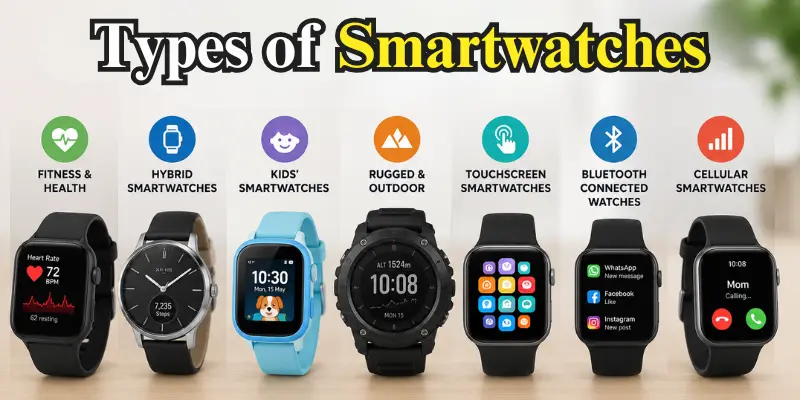
- Fitness & Health Smartwatches
- Hybrid Smartwatches
- Kids’ Smartwatches
- Rugged & Outdoor Smartwatches
- Touchscreen Smartwatches
- Bluetooth Connected Watches
- Cellular Smartwatches
Each type offers unique features to suit specific users and purposes. Let’s explore them in detail.
Fitness & Health Smartwatches
Fitness and health smartwatches are made for people who want to track their daily activity, workouts, and basic health data.
These watches usually include features like heart rate tracking, step counting, sleep tracking, calories burned, workout modes, and GPS.
| Pros: |
|---|
|
| Cons: |
|---|
|
Best for: Health tracking, workouts, running, walking, gym users, sleep tracking, heart rate monitoring, and active lifestyle users.
Hybrid Smartwatches
Hybrid smartwatches look like traditional analog watches but include some smart features inside.
They usually have physical watch hands and a classic design. Many hybrid watches can track steps, show basic notifications, vibrate for calls or messages, and offer longer battery life than full touchscreen smartwatches.
| Pros: |
|---|
|
| Cons: |
|---|
|
Best for: Traditional watch lovers, office users, formal wear, minimal smartwatch users, basic activity tracking, and people who want fewer distractions.
Kids’ Smartwatches
Kids’ smartwatches are designed for children and family safety.
These watches usually include GPS location tracking, calling, simple messaging, SOS alerts, and parental control features. They are helpful for parents who want to stay connected with their children without giving them a full smartphone.
| Pros: |
|---|
|
| Cons: |
|---|
|
Best for: Children, parents, family safety, GPS tracking, simple calling, emergency alerts, and kids who are too young for a smartphone.
Rugged & Outdoor Smartwatches
Rugged and outdoor smartwatches are built for tough conditions and adventure use.
These watches usually come with a strong body, durable screen, water resistance, GPS, compass, altimeter, barometer, maps, and long battery life. They are made for people who spend time outdoors or need a watch that can handle rough use.
| Pros: |
|---|
|
| Cons: |
|---|
|
Best for: Hiking, camping, climbing, trail running, outdoor adventure, military-style use, and users who need a durable smartwatch.
Touchscreen Smartwatches
Touchscreen smartwatches have a full digital display that you can control by tapping, swiping, and scrolling.
These watches are popular because they feel like a small smartphone on the wrist. They can show apps, notifications, music controls, calls, messages, fitness data, settings, and even contactless payments on supported models.
| Pros: |
|---|
|
| Cons: |
|---|
|
Best for: Daily users, app users, notifications, calls, music control, fitness tracking, payments, and people who like a modern digital display.
Bluetooth Connected Watches
Bluetooth-connected watches connect to your smartphone through Bluetooth.
These watches depend on your phone for many features. When your phone is nearby, they can show notifications, call alerts, messages, app alerts, and basic fitness data. They are a good option for people who want simple smartwatch features without cellular service.
| Pros: |
|---|
|
| Cons: |
|---|
|
Best for: Basic smartwatch use, phone notifications, call alerts, daily wear, budget users, and people who usually keep their phone nearby.
Cellular Smartwatches
Cellular smartwatches support eSIM, SIM, LTE, or mobile network connectivity. Unlike Bluetooth-only smartwatches, they can stay connected even when your smartphone is not nearby.
These watches can make calls, send messages, play music, receive notifications, and use internet-based features without relying on a phone connection. They are useful for users who want more freedom from their smartphone while staying connected throughout the day. Many cellular smartwatches also include fitness tracking, GPS, emergency calling, and location-sharing features.
| Pros: |
|---|
|
| Cons: |
|---|
|
Best for: Phone-free use, calls, messages, running, workouts, emergency contact, seniors, and busy professionals.
How to Choose the Right Smartwatch for You
Choosing the right smartwatch depends on your lifestyle, daily needs, and budget. Instead of choosing the most expensive model, focus on the features that matter most to you. Here are some key factors to consider:
1. Identify Your Main Purpose
Think about why you want a smartwatch and how you plan to use it in your daily life.
- Fitness & Health Smartwatch: Ideal for workouts, activity tracking, heart rate monitoring, and overall health tracking.
- Hybrid Smartwatch: Perfect if you prefer a classic analog-style design with basic smart features and longer battery life.
- Kids’ Smartwatch: Best for child safety, GPS tracking, calls, messaging, and parental controls.
- Rugged & Outdoor Smartwatch: Great for hiking, camping, climbing, trail running, and other adventure activities.
- Touchscreen Smartwatch: Designed for interactive use with apps, notifications, music, fitness data, and payments.
- Bluetooth-connected Watch: Good for users who mainly need smartphone notifications and alerts without cellular connectivity.
- Cellular Smartwatch: Ideal for calls, messages, and mobile connectivity without relying on your phone.
Knowing your primary needs will make it easier to find the right smartwatch for your lifestyle.
2. Check Phone Compatibility
Before buying a smartwatch, make sure it works with your smartphone. Some smartwatches perform better with Android devices, while others are designed to work best with iPhones. Choosing a compatible watch ensures you can use all its features without limitations.
3. Consider the Features You Need
Different smartwatches offer different features. Think about which ones are most important for your daily use, such as:
- Heart rate monitoring
- Sleep tracking
- GPS navigation
- Workout tracking
- Call and message notifications
- Mobile payments
- Blood oxygen monitoring
4. Check Battery Life
Battery life varies by smartwatch type. Some models can last for weeks on a single charge, while others may need charging every day or two. If long battery life is important to you, compare battery performance before buying.
5. Choose a Comfortable Design
Since you will wear your smartwatch regularly, comfort matters. Consider the watch size, weight, strap material, and overall design to ensure it feels comfortable throughout the day.
6. Set Your Budget
Smartwatches are available at different price points. Basic models provide essential features, while premium models offer advanced health tracking, better displays, and additional smart functions. Choose a watch that fits both your needs and your budget.
7. Reviews and Reliability
Always check customer reviews and ratings before buying a smartwatch. They help you understand real performance, durability, and possible issues. Also, choose a reliable brand with good feedback to make sure better quality and long-term use.
Conclsuion
So guys, in this article, we’ve covered types of smartwatches in detail. Each type is designed for different needs, whether it’s fitness tracking, outdoor adventures, kids’ safety, or everyday use. The final choice depends on your lifestyle, preferences, and budget. Take your time, compare the features, and choose the smartwatch that fits you best.
If you found this guide helpful, share it with others and help them choose the right smartwatch too.
Frequently Asked Questions (FAQs)
Here are the answers to some common questions about different kinds of smartwatches:
A smartwatch is a wearable device that looks like a watch but works like a small smartphone. It can show notifications, track fitness, and monitor health. Some models can also make calls and use apps.
A fitness and health smartwatch is usually best for beginners. It is simple to use and focuses on basic tracking like steps, heart rate, and sleep. It gives good value without being too complex.
Yes, if you spend time outdoors or do adventure activities. They are strong, durable, and have advanced GPS features. For normal daily use, they may be more than you need.
Popular smartwatch brands include Apple, Samsung, Garmin, Fitbit, and Huawei. Each brand offers different features for fitness, lifestyle, and premium users. You should choose based on your device compatibility and needs.
Yes, some advanced smartwatches can detect irregular heart rhythms, such as atrial fibrillation (AFib). They use heart rate sensors and ECG features to monitor heart activity. However, they are not a replacement for medical diagnosis.





- Be Respectful
- Stay Relevant
- Stay Positive
- True Feedback
- Encourage Discussion
- Avoid Spamming
- No Fake News
- Don't Copy-Paste
- No Personal Attacks
- Be Respectful
- Stay Relevant
- Stay Positive
- True Feedback
- Encourage Discussion
- Avoid Spamming
- No Fake News
- Don't Copy-Paste
- No Personal Attacks
