Dual SIM Mobile Phones: Benefits & Drawbacks
Published: 28 Nov 2025
In today’s world, staying connected is important than ever, and dual SIM mobile phones help make that easier. Whether you want to manage both personal and work calls or get better network coverage in remote areas, dual SIM phones offer many benefits. However, like all technology, they also come with some challenges.
In this article, we’ll explore the advantages and disadvantages of dual SIM mobile phones to help you decide if they’re the right choice for you. So let’s get started.
Advantages of Dual SIM Mobile Phones
Dual SIM phones offer great versatility, making it easier to manage multiple numbers and find the best network coverage. Let’s take a look at the key advantages they offer.
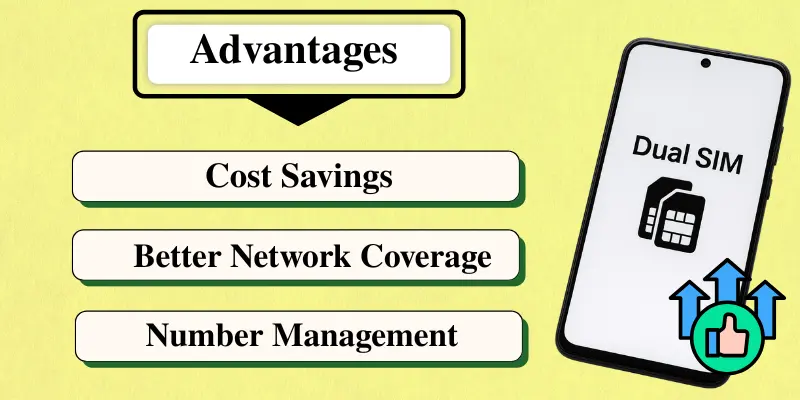
1. Cost Savings
For frequent travelers or anyone who wants to optimize their mobile plans, dual SIM phones are a game-changer. Imagine you’re in a different country and need to use a local SIM for cheaper data and call rates while still keeping your home number active. This is possible with a dual-SIM phone.
Example:
Let’s say you live in the U.S., but you travel to Europe often. You can keep your U.S. SIM for incoming calls and use a local European SIM for your data and outgoing calls. Not only does this help you avoid high roaming fees, but it also keeps you connected without the need for multiple devices.
2. Better Network Coverage
One of the most important advantages of dual-SIM phones is the ability to access two different networks. This feature is particularly useful in areas where network coverage from one carrier is spotty. With two SIM cards from different carriers, you can always be sure you’re on the best network available.
Example:
If you live in a rural area where one carrier’s signal is weak, a dual SIM phone allows you to switch to the other carrier’s network, ensuring you always have a reliable connection.
3. Manage Personal and Work Numbers
For professionals who prefer not to carry two phones, dual-SIM phones provide a perfect solution. You can have one SIM for personal calls and another for work, all on the same device. This keeps your communication organized without the hassle of managing two devices.
4. Better Privacy and Control
Dual SIM phones allow users to maintain greater privacy. For instance, you can use one number exclusively for social media apps, online registrations, or public interactions, and keep your main number private for close contacts. This adds a layer of protection against spam calls, data breaches, and unwanted communication.
5. More Flexibility and Convenience
Managing two numbers on a single phone allows users to simplify their lives. Whether it’s separating work and personal calls or switching between two carriers for the best deals, dual SIM phones give you the freedom to customize your mobile experience.
Disadvantages of Dual SIM Mobile Phones
While dual SIM phones offer plenty of benefits, they also come with some drawbacks. Let’s take a closer look at some of the issues that come with using a dual SIM device.

1. Battery Drain
Running two SIM cards simultaneously can consume more battery power. While this might not be a big issue for lighter users, it can be a concern for heavy users who rely on their phones for both work and personal tasks. The phone has to manage two networks at once, which can drain the battery faster.
2. Performance Impact
Some budget or older dual SIM phones might not perform as efficiently as their single SIM ones. The processor might be under more stress managing two SIM cards at once, which could lead to slower performance, especially when multitasking.
Example:
You may notice lag or slower processing speed when using apps, especially if both SIM cards are being actively used for data or calls.
3. Compatibility Issues
Not all carriers support dual SIM functionality. Some regions or countries have network restrictions that may limit your ability to use two different networks simultaneously. It’s essential to check if your carrier supports dual-SIM functionality before purchasing a dual-SIM phone.
4. Security Concerns
Using two SIM cards in one device exposes your phone to two distinct networks. This could increase your vulnerability to potential security risks, especially if one of your SIM cards is from a less secure network.
5. Additional Costs
Dual SIM phones can help save money in the long run, but models with advanced features like Dual SIM Dual Active often cost more at the start. Additionally, some mobile carriers may apply extra charges for using two SIM cards.
Quick Tips for Dual SIM Mobile Phone Users
Here are a few quick and easy tips to help you get the most out of your dual SIM phone.
- Rename SIMs (e.g., “Work” and “Personal”) to avoid confusion.
- Set the default SIM for calls, texts, and mobile data.
- Turn off one SIM card when not in use to save battery.
- Monitor data usage on each SIM to prevent extra charges.
- Use one SIM for apps, the other for banking and OTPs.
- While travelling, use a local SIM for data and keep your main number active.
Conclusion
Dual SIM mobile phones are a smart option for people who want to separate work and personal numbers, optimize their mobile plans, or stay connected while traveling. But like any device, they come with some drawbacks, such as battery drain and potential performance issues.
By understanding these pros and cons, you can determine if a dual SIM phone is the right choice for your lifestyle.
Do you use a dual SIM phone? Share your experience in the comments below!
Frequently Asked Questions (FAQs)
Here are the answers to some common questions about the pros and cons of dual SIM phones:
Dual SIM Dual Standby means both SIMs are active, but only one can be used at a time. Dual SIM Dual Active allows both SIMs to work simultaneously, making it ideal for people who want to receive calls on both numbers at the same time.
Yes, many modern dual SIM phones do support 5G, but this feature depends on the phone model and the network capabilities of the carrier.
Yes, using two SIM cards can use a little more battery. This is because the phone keeps both networks active at the same time. But the extra battery drain is usually small and not a big problem in daily use.
Yes, most dual-SIM phones allow SIM cards from different networks. This helps improve coverage or take advantage of other data and call plans.
Dual-SIM phones are not always more expensive. Many budget and mid-range phones already come with dual-SIM support at no extra cost. Only some high-end models may cost more, but the feature itself doesn’t make a big difference in price.






- Be Respectful
- Stay Relevant
- Stay Positive
- True Feedback
- Encourage Discussion
- Avoid Spamming
- No Fake News
- Don't Copy-Paste
- No Personal Attacks
- Be Respectful
- Stay Relevant
- Stay Positive
- True Feedback
- Encourage Discussion
- Avoid Spamming
- No Fake News
- Don't Copy-Paste
- No Personal Attacks
