Dangers of Using Mobile Phones While Driving: Risks, Effects and Safety Facts
Published: 8 Apr 2026
Every time you use a mobile phone while driving, you put your life and others at serious risk. It is one of the main causes of distracted driving. Many people think a quick phone check is harmless, but even a few seconds can lead to a serious accident, severe injury, or death.
Texting does not create the only risk. Calls, GPS, music apps, messages, and social media also distract drivers from the road. Drivers must give full attention at all times to drive safely.
In this guide,we will describe the risks, show how distracted driving affects you, and give simple steps that help drivers stay safer. So, let’s dive in
Why Using a Mobile Phone While Driving Is So Dangerous
Driving needs your full attention. Your eyes, hands, and mind must work together all the time. Road conditions can change in one second. A car may stop fast, a person may cross the road, or a traffic light may turn red. A safe driver notices these changes quickly and reacts accordingly to the situation.
A mobile phone breaks that focus. When you look at the screen, your eyes leave the road. When you hold the phone, your hands lose proper control of the car. When you read a message, answer a call, or use an app, your mind moves away from driving.
This is why using a mobile phone while driving is so dangerous. It affects your vision, control, and thinking at the same time. Even if you are looking ahead, your brain may not fully notice what is happening. That is why phone distraction is a major road safety risk.
3 Main Types of Distraction Caused by Mobile Phones
Using a mobile phone while driving causes visual, manual, and cognitive distraction. These three types of distractions show why phone use on the road is so risky.
Visual Distraction
Visual distraction occurs when a driver looks away from the road to view a phone screen. This can happen while reading a text, checking a notification, using GPS, looking at the caller ID, or opening a music app.
Even a quick glance risks you. In that short time, the car in front may stop, a traffic light may turn green, or a person may step onto the road. Good drivers keep their eyes on the road. If you fail to watch ahead, you miss the chance to react in time.
Manual Distraction
Manual distraction occurs when a driver removes one or both hands from the wheel to use a phone. Drivers pick up the phone, unlock it, type, swipe, answer calls, or dial numbers.
Drivers need both hands for control. Removing one weakens steering.The car may drift, lane control may get worse, and sudden turns may become harder. This risk becomes even higher in heavy traffic, on narrow roads, at high speeds, or in bad weather.
Cognitive Distraction
Cognitive distraction occurs when the phone occupies the driver’s mind rather than the road. The driver may still look ahead, but their mind focuses elsewhere.
Common examples include:
- having an emotional phone call
- thinking about a reply to a message
- focusing on stressful news
- paying too much attention to app directions
Cognitive distraction slows your thinking and weakens your attention. Even if you notice danger, you may still react too late because your mind does not fully focus on driving.
How Mobile Phone Use Affects Driving Performance
Using a mobile phone while driving seriously endangers driving performance. Some drivers think it causes only a small distraction, but that is not true. Phone use can reduce control, slow response times, and increase the risk of a crash. Even a short phone check can create a dangerous situation on the road.
1. Slower Reaction Time
Reaction time means how fast a driver responds to danger. A distracted driver may brake late, turn late, or slow down too slowly when traffic changes. This delay may seem small, but it can have serious consequences. Even one or two seconds can change a safe stop into a crash. For example, if a child suddenly runs across the road, a distracted driver may not stop in time.
2. Reduced Situational Awareness
Situational awareness is knowing what is happening around your vehicle, including nearby cars, people crossing the road, cyclists, traffic lights, signs, and road changes. When a driver focuses on the phone instead of the road, this awareness drops, and important risks can be missed.
3. Poor Lane and Speed Control
Drivers who use phones often drift in their lane, make late steering corrections, or slow down without noticing, which becomes more dangerous on busy roads and at high speeds. Good driving needs steady control, and phones make that harder.
4. Missed Signs and Unsafe Decisions
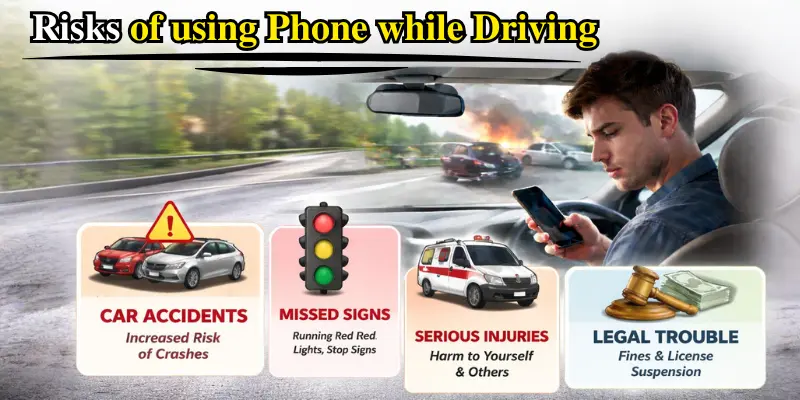
Phone use can make you miss traffic signs like lights, stop signs, speed limits, school zones, or construction warnings. It can also affect your judgment, causing unsafe lane changes or misjudging traffic gaps. Missing signs or overspeeding can even lead to fines (challans). When your attention is divided, driving safely becomes much harder.
Why Texting While Driving Is More Dangerous Than Talking
Not all phone use is equally dangerous. Some actions create more risk than others, and texting is one of the worst. Why? Because the texting can divert your eyes, hands, and mind away from driving at the same time.
When a driver texts, they usually:
- Look at the screen of a mobile phone.
- Hold the phone or type on the phone.
- Think about what to read or write.
This means texting causes visual, manual, and mental distraction together. That is what makes it so dangerous. A driver may miss a red light, drift out of the lane, or fail to stop in time.
In simple words, texting while driving is often more dangerous than talking because it takes your eyes, hands, and mind off the road at once.
Quick Comparison Table
| Activity | Visual | Manual | Cognitive | Risk Level |
|---|---|---|---|---|
| Texting | High | High | High | Very High |
| Reading messages | High | Low/Medium | Medium | High |
| Handheld call | Low | Medium | High | Medium to High |
| Hands-free call | Low | Low | High | Moderate |
| Checking GPS or apps | High | Medium | Medium | High |
Real-World Dangers of Using a Mobile Phone While Driving
Now the big question is simple: what can really happen on the road when a driver uses a phone? The answer is serious. Even one distracted moment can lead to harm, loss, and long-term problems.
1. Increased Risk of Car Accidents
Using a mobile phone while driving increases the risk of accidents. A distracted driver may hit a car from behind, drift into another lane, miss a stop sign, or make a wrong turn at a corner. Driving needs continuous attention, and phone use breaks that focus. When attention drops, the risk of a crash rises fast.
2. Injuries and Fatalities
A road accident is not only about damage to a vehicle, but it can also cause serious injuries or death. At high speed, even a small mistake can have serious consequences. One quick phone check can change many lives in seconds.
3. Harm to Other Road Users
The danger not only affects the driver. Other people on the road can also suffer. This includes passengers, pedestrians, cyclists, motorcyclists, school children, and other drivers. One person’s distraction can hurt many innocent people.
4. Legal and Financial Consequences
Using a handheld phone while driving is illegal in many places. A driver may face fines, higher insurance costs, legal problems, or lost income. So, the danger is not only about distraction. It is also about the real cost that can follow.
Common Phone Activities That Distract Drivers
Many drivers think texting is the only dangerous phone activity, but that is not correct. Many other phone actions can distract a driver in almost the same way. Some take your eyes off the road. Some take your hands off the wheel. Others distract you from driving.
Common distracting phone activities include:
- texting
- reading messages
- answering calls
- making calls
- checking the caller ID
- looking at notifications
- changing music or podcasts
- using navigation apps
- scrolling social media
- reading emails
- taking photos or recording videos
- changing app settings
The result is often the same. Your attention moves away from the road. Even a quick phone check can create danger. For example, while changing a song, you may miss a red light or fail to see a car stopping ahead.
How to Avoid Using Your Phone While Driving
The safest choice is to avoid using your phone while driving. Take a moment before you start moving to manage your phone. With a little planning, you can make your drive smoother and stay safer.
1. Turn On Driving Mode or Focus Mode
Many phones have Driving Mode or Focus Mode. These features can silence alerts, block calls, and reduce distractions. This helps you keep your eyes on the road and your mind on the road.
2. Set Navigation Before You Drive
Need GPS? Enter the address before you start the car. Do not type, search, or change the route while driving. One small setup before driving can prevent a big risk later.
3. Put Your Phone Out of Reach
Keep your phone in a bag or the back seat. When the phone is more difficult to reach, you are less likely to check it. Out of sight often means out of mind.
4. Use Do Not Disturb While Driving
This “Do Not Disturb” setting can block calls, texts, and app notifications while you drive. It creates a safer and more peaceful driving experience.
5. Pull Over for Urgent Calls or Messages
Is something truly urgent? Stop the car in a safe place first. Then check your phone. A quick reply is never worth a crash.
6. Ask a Passenger for Help
If someone is with you, let them handle navigation or important messages. This practice keeps your hands on the wheel and your attention on the road.
7. Keep Calls Short
Even if you use Bluetooth or your car’s system, try to keep calls short and sweet. Save deeper or stressful conversations for when you’ve parked safely.
Conclusion
Using a mobile phone while driving is a danger that people can avoid. It may seem harmless for a moment, but answering a call or message can cause a serious car accident. Phone use can take your eyes off the road, your hands off the wheel, and your mind away from driving.
That is why texting, calling, scrolling, and even hands-free use should be taken seriously. The safest choice is to put your phone away before driving.
No message is worth a life.
Frequently Asked Questions (FAQs)
Here are the answers to some common questions about the dangers of using mobile phones while driving:
Yes, it is risky to use a mobile phone while driving. It distracts you from the road. It can have immediate effects on your eyes, hands, and thoughts.
Texting while driving is very dangerous because it causes three types of distraction simultaneously. The driver looks at the screen, types with their hands, and reads the message. This suggests that they can’t fully concentrate on the road. This is why texting is one of the most harmful phone activities while driving.
Yes, hands-free calls can still distract drivers. Even though your hands stay on the wheel, your mind becomes focused on the conversation instead of the road. This mental distraction can slow your reaction time and increase the risk of accidents.
Mobile phone use slows reaction time while driving. A distracted driver may brake late, steer late, or respond too slowly to sudden danger. Even a short delay can be serious. For example, a driver may not stop in time if a car suddenly stops ahead.
Inattention blindness in driving means a driver looks at the road but does not fully notice danger. This occurs when the driver’s mind is occupied with something else, such as a phone call or a message. The eyes may be forward, but the brain is not entirely focused on driving. This makes the road more unsafe.
Yes, checking GPS while driving can be dangerous. Not only will it divert your attention away from the road, but it may also occupy your hands. When drivers repeatedly glance at the map or change their route while driving, the risk increases. To be safe, always set the GPS before you start driving.




- Be Respectful
- Stay Relevant
- Stay Positive
- True Feedback
- Encourage Discussion
- Avoid Spamming
- No Fake News
- Don't Copy-Paste
- No Personal Attacks
- Be Respectful
- Stay Relevant
- Stay Positive
- True Feedback
- Encourage Discussion
- Avoid Spamming
- No Fake News
- Don't Copy-Paste
- No Personal Attacks
