Pros and Cons of Flip Phones
Published: 7 May 2026
These days, flip phones may seem old-fashioned because smartphones like the iPhone are so popular. But a lot of people still choose them when they want something easier and more effective.
With long-lasting battery life, durability, and a user-friendly design, flip phones offer several advantages. But are they really as good as they seem?
Let’s take a look at the pros and cons of flip phones.
Pros of Flip Phones
There are several advantages that flip phones have which a lot of modern cell phones can’t have. Let’s get into the top 10 benefits of flip-type phones:
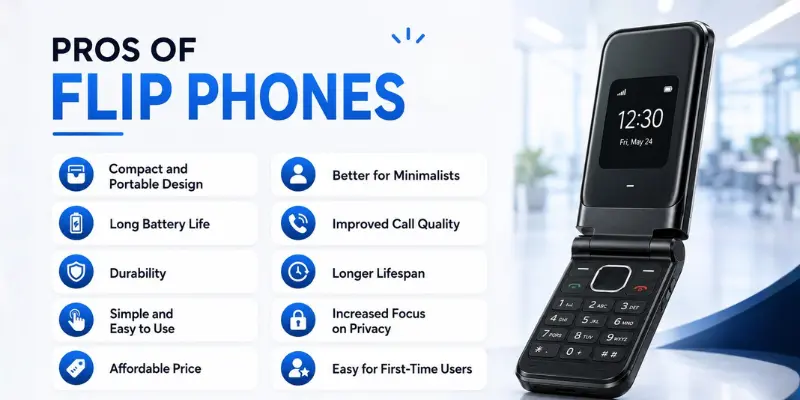
1. Compact and Portable Design
The folding design is so compact and convenient to carry that it makes flip phones truly portable. This makes them an ideal option for anyone who wants a lightweight phone that won’t take up much space.
- Easy to carry while travelling or moving around.
- Ideal for users who prefer lightweight devices.
- Fits easily into small pockets, bags, or purses.
2. Long Battery Life
One of the standout features of flip phones is their long battery life. Since they lack energy-draining apps and large screens, they can last several days on a single charge.
- Can last 3–5 days on a single charge.
- Ideal for long journeys or places where charging may be difficult.
- No need to charge every day like smartphones.
3. Durability
Flip phones are known for their rugged build. With a sturdy clamshell design, they are more durable than many modern smartphones, making them more suitable for people who often drop their phones.
- More resistant to accidental drops and scratches.
- Built to handle regular daily use.
- The folding design helps protect the screen when closed.
4. Simple and Easy to Use
For those who prefer a basic phone, flip phones are ideal. No fancy apps and settings to deal with and all the tools are accessible with a single click.
- No unnecessary apps or constant notifications.
- Perfect for seniors or people who are not comfortable with modern smartphones.
- Easy navigation with a physical keypad.
5. Affordable Price
Flip phones are usually much more affordable than modern smartphones. They are a great option for users who want a simple mobile phone without spending a lot of money.
- Cheaper to buy than most smartphones.
- Often comes with lower monthly service costs.
- No additional data plans or subscriptions required.
6. Better for Minimalists
A flip phone is a simple way to communicate for those who want to minimize screen time or avoid social media distractions.
- Focuses on essential features like calling and texting.
- Helps reduce distractions from social media and constant notifications.
- Ideal for those who value simplicity and practicality.
7. Improved Call Quality
Flip phones are often better at handling calls, as they have fewer interruptions from apps or other processes running in the background.
- Improved call quality and fewer dropped calls.
- Multiple apps do not interfere with each other.
- Clear, uninterrupted conversations.
8. Longer Lifespan
Flip phones are designed to last for many years due to their simple design and strong build. They do not depend heavily on advanced software, so they stay usable for a long time.
- Requires fewer software updates over time.
- Less likely to experience hardware problems.
- Can be used for years without needing frequent upgrades.
9. Increased Focus on Privacy
Flip phones are mainly used for basic tasks like calling and texting, so they don’t run many apps that collect personal data. This makes them a better choice for users who care about privacy.
- Less data is collected compared to smartphones.
- No constant tracking or location sharing.
- More control over your personal information.
10. Easy for First-Time Users
Flip phones are very simple for people who are using a mobile phone for the first time. They do not require learning complex apps or settings, making them very beginner-friendly.
- Easy-to-use and user-friendly interface.
- No need for a tutorial or guide.
- User-friendly for both beginners and older users.
Cons of Flip Phones
While flip phones offer several benefits, they also have some drawbacks that may not make them suitable for everyone.
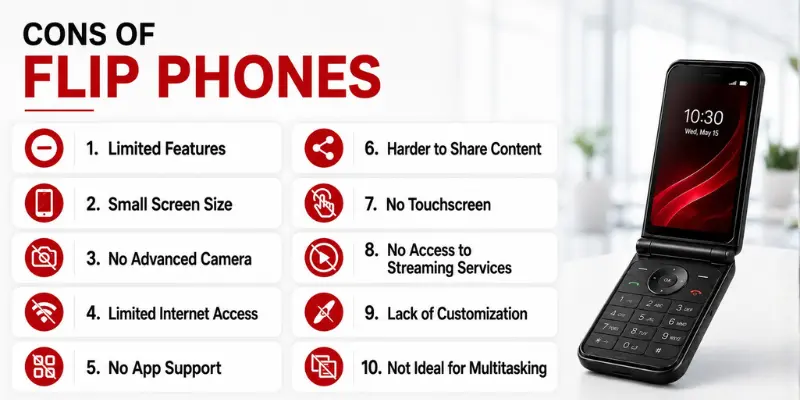
Let’s look at the top 10 disadvantages of flip phones.
1. Limited Features
Flip phones offer only basic functions compared to modern smartphones like iPhones. They are mainly designed for calling and texting, so they do not include many advanced features.
A flip phone can feel limiting if you need more functionality in a device.
- No social media or full internet browsing support.
- Very limited app options.
- No advanced features like voice assistants or face recognition.
2. Small Screen Size
Flip phones typically come with small screens, which can make it difficult to view content or navigate apps (if they are available).
- Difficult to read text on a small screen.
- Not ideal for watching videos or browsing the web.
- Limited screen space makes multitasking harder.
3. No Advanced Camera
Flip phones usually come with basic cameras that do not offer the same quality or features as modern smartphones. This can be a deal-breaker for anyone who uses their phone for photography.
- Low-quality cameras with limited resolution.
- Few camera features, such as portrait mode or zoom.
- Lacks the selfie and video conference camera.
4. Limited Internet Access
Many flip phones offer basic internet access, but it is usually slower and more limited than the internet experience on a smartphone.
- Limited browsing features and slow internet speed.
- Some modern websites and apps may not open properly.
5. No App Support
Unlike smartphones, flip phones don’t support a wide range of apps, meaning you can’t access popular tools like social media platforms, productivity apps, or entertainment services.
- No access to Google Play Store or Apple App Store.
- Limited gaming and entertainment options.
- No notes taking or productivity software such as Google Docs.
6. Harder to Share Content
Uploading photos, videos, or other media from a flip phone is much more difficult compared to a smartphone. Limited app support and internet features make sharing content less convenient.
- No easy sharing through social media or email.
- Limited file transfer methods.
- No cloud storage or photo-sharing options.
7. No Touchscreen
Unlike modern smartphones, most flip phones do not come with a touchscreen display. Instead, users have to navigate using physical buttons and keypads, which can feel slower and less convenient for some people.
- Physical buttons instead of touch gestures.
- Navigation may feel less smooth and intuitive.
- Slower overall user experience.
8. No Access to Streaming Services
Most flip phones do not support popular streaming apps like Netflix, Spotify, or YouTube, which makes them less suitable for entertainment and media use.
- No support for movie or TV streaming services.
- Music options are often limited, such as FM radio or basic MP3 players.
- No access to podcasts or audio streaming apps.
9. Lack of Customization
Flip phones typically have a fixed design, with few options for customization. You can’t change the interface or add widgets like you can on smartphones.
- Limited themes and screen layout options.
- No app customization or personalization.
- Fixed ringtone and wallpaper options.
10. Not Ideal for Multitasking
Flip phones are designed for basic tasks, so they do not handle multitasking well like modern smartphones. You can only use one function at a time, which can feel limiting for advanced users.
- Cannot run multiple apps at the same time.
- No split-screen or multitasking features.
Conclusion
So guys, in this article, we’ve covered the pros and cons of flip phones in detail. These phones are best for users who prefer basic features, long battery life, and easy usage without distractions.
Personally, I suggest using a flip phone if you prefer simplicity and fewer distractions, but a smartphone is better if you need advanced features like apps, social media, and fast internet.
If you found this helpful, share it with others who might be confused about choosing a flip phone.
Frequently Asked Questions (FAQs)
Here are the answers to some common questions about the benefits and drawbacks of flip phones :
It depends on your needs. Flip phones are great for simplicity and battery life, while smartphones offer more functionality and features.
Some flip phones offer basic internet browsing, but the speeds and features are limited compared to smartphones.
Yes, most flip phones have basic cameras, but they are not as high-quality as those on modern smartphones.
Yes, flip phones are generally more affordable than smartphones, both in terms of purchase price and service plans.



- Be Respectful
- Stay Relevant
- Stay Positive
- True Feedback
- Encourage Discussion
- Avoid Spamming
- No Fake News
- Don't Copy-Paste
- No Personal Attacks
- Be Respectful
- Stay Relevant
- Stay Positive
- True Feedback
- Encourage Discussion
- Avoid Spamming
- No Fake News
- Don't Copy-Paste
- No Personal Attacks
