What is a Phone Charger and Learn Which Type is Best for You
Published: 21 Apr 2026
Do you not know what a phone charger is and what type of charger suits you? Don’t worry, you are not alone. With so many types available today, choosing the right charger can feel confusing.
In this guide, we’ll explain everything you need to know about phone chargers, including their types, how they work, and how to choose the best one for your needs. So, let’s get started!
What Does a Phone Charger Do?
A phone charger is an important gadget used to power your phone by providing a safe flow of electricity.
First, it takes electricity from the wall outlet. This electricity is in the form of alternating current (AC), while your phone battery works on direct current(DC). The charger converts AC into DC to charge your phone.
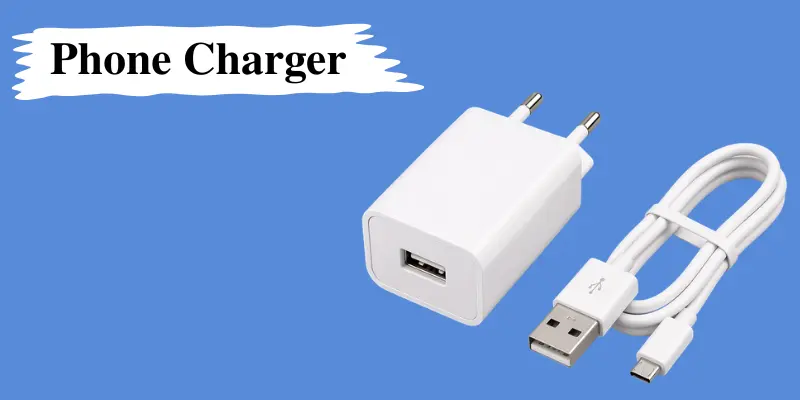
After converting electricity, the charger charges the battery without risk. To make sure the charger doesn’t overpower the phone, modern smartphones are equipped with protection mechanisms to prevent overcharging and overheating.
How Does a Phone Charger Work? (Step-by-Step)
Here are some ways to understand the working of a phone charger.
- Power from Outlet
It begins when you insert the charger into an electrical outlet. This provides alternating current (AC) electricity, which needs to be converted for your phone to use. An outlet is usually high-voltage and can be harmful to your device; therefore, it must be safely processed. - Adapter Converts Voltage
The adapter, also known as the brick aspect of the charger, converts the high-voltage AC that comes out of the outlet to low-voltage direct current (DC). This type of electricity is safe for your phone’s battery and allows it to charge properly without any issues. - Cable Transfers Energy
The power, now converted into DC, travels from the adapter to your phone through the charging cable. It is the job of the cable to transmit this energy to the phone without any loss or discontinuity of the flow so that it can be delivered to the device in a steady flow. - Phone Regulates Intake
Once the power reaches your phone, the internal charging circuit takes control. It manages how much electricity goes into the battery, preventing overcharging and protecting it from damage. This helps keep your battery healthy over time. - Battery Stores Energy
Lastly, the phone’s battery stores the energy it receives, allowing you to use your phone throughout the day. It continues charging until the battery is full, and then the phone automatically stops charging.
Parts of a Phone Charger
Want to know about the main parts or components of a mobile phone charger? Let’s discuss the three main parts in detail.
1. Wall Adapter (Brick)
The wall adapter is the brick that fits into the power socket. It transforms high outlet voltages into low outlet voltages of DC, safe to use by your phone. It also helps control the power and ensures safe charging for your device.
2. Charging Cable
The wall adapter will be linked to your phone by the charging cable. It is the tube through which the electrical energy flows from the adapter to the phone battery. The quality and strength of the cable can affect how fast and efficiently your phone charges.
3. Connections (USB-C, Lightning, Micro-USB)
The basis of the charger that fits your phone is called the connector. Different phones use different types of connectors, such as USB-C, Lightning, or Micro-USB. These connectors promote compatibility between your phone and the charger.
Here is a quick table about the main components of the charger.
| Component | Function | Example |
|---|---|---|
| Wall Adapter | Converts AC power to DC for the phone’s battery | Standard 5W Apple adapter |
| Charging Cable | Transfers converted energy from the adapter to the phone | 1-meter USB-C to USB-C cable |
| Connectors | Connects the cable to the phone’s charging port | USB-C, Lightning, Micro-USB |
Types of Phone Chargers
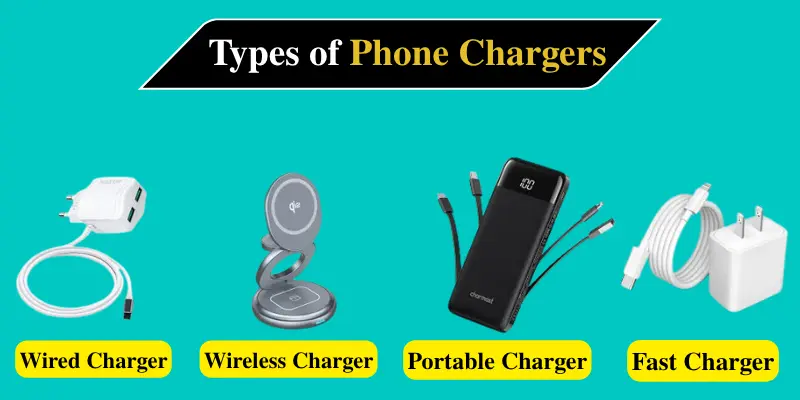
Phone chargers come in different types, each designed to meet specific needs like speed, convenience, and portability. Understanding these types will help you choose the right charger for your device and daily use.
1. Wired Chargers
Wired chargers use a cable to connect your phone to a power source. They usually come with USB, USB-C, or Lightning connectors and are known for fast and reliable charging. They are easy to operate and give a stable connection without the use of Bluetooth pairing or wireless interference.
Unlike wireless chargers, wired chargers do not need to be charged themselves, making them more convenient. They are also less expensive than wireless chargers and offer stable performance with no delays in charging speed.
Wired chargers will be the best fit with individuals who require a dependable, simple charging system. They are the preferred choice of users who prioritize productivity and do not mind using a cable.
2. Wireless Chargers (Qi)
Wireless chargers use magnetic fields to transfer power to your phone without any cables. You simply place your phone on the charging pad, and it starts charging.
They are smaller and can fit on a desk or nightstand, but wireless chargers are usually slower than wired ones. They need to be perfectly aligned so that you can be sure that your phone is charging, and that can be difficult at times.
Wireless chargers are a great choice for people who want a convenient and cable-free charging experience. However, if you need faster charging, a wired charger may be a better option.
3. Portable Chargers (Power Banks)
Portable chargers, also known as power banks, are battery packs that let you charge your phone anywhere. They are small and easy to carry, making them perfect for travel or when you don’t have access to a power supply.
Most power banks come with multiple USB ports, so you can charge more than one device at the same time. However, they need to be recharged after use, and their charging capacity depends on how much battery they have left.
Portable chargers are a great option for people who need to charge on the go. They are especially useful during travel, but you must keep them charged to use them when needed.
4. Fast Chargers
The fast chargers have increased wattage, which allows your phone to be charged very fast compared to using the normal chargers. Such technologies as USB Power Delivery (PD) and Quick Charge make it possible, shortening your waiting time to a fully charged phone.
Whereas fast chargers are quick to recharge your device, they are generally pricier compared to regular ones. They are also ideal for individuals who have hectic schedules and need to be charged in a relatively short time, such as when in the workplace and during commutes.
Advantages and Disadvantages of Phone Chargers
A phone charger is essential for powering your device. Here are the key pros and cons of phone chargers:
| Pros of Phone Chargers: |
|---|
|
| Cons of Phone Chargers: |
|---|
|
Charger vs Cable: Understanding the Difference
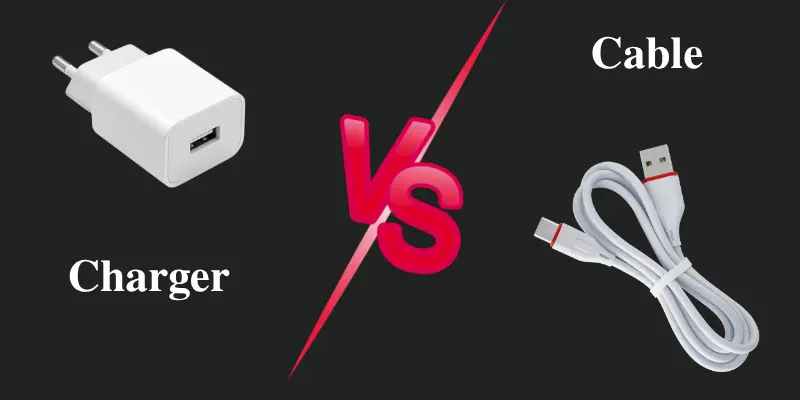
When it comes to charging your phone, both the charger and the cable play crucial roles. They work together, but each has a different role that many people don’t fully understand. Here’s a simple explanation:
| Feature | Charger | Cable |
|---|---|---|
| Function | Converts power from the outlet to a usable form (DC) for the phone’s battery. | Transfers the power from the charger to your phone. |
| Required? | Yes, essential for charging. | Yes, essential for transferring power. |
How to Choose the Right Phone Charger
Choosing the right phone charger can be tricky, but considering a few key factors will help you find the best one for your device and needs. Here’s what you should focus on:
1. Device Compatibility
Not all chargers are the same, so it’s important to choose one that works with your phone. For example, an iPhone charger is different from an Android charger because they use different connectors and technologies.
- For iPhone: Use Lightning (older models) or USB-C (newer models) cables, and choose Apple-certified chargers that support fast charging like USB Power Delivery (PD).
- For Android: Look for chargers that support fast charging technologies like Quick Charge or USB Power Delivery (PD). Most Android phones use USB-C connectors.
2. Wattage Support
Charging speed depends on the charger’s wattage. For example, a 20W charger will charge your phone faster than a 10W charger. To get the best speed, use a charger that supports your phone’s maximum wattage.
3. Type of Port (USB-C, Lightning, and so on)
Various devices use different charging ports. For example:
- The iPhone uses Lightning (in older models) and USB-C (in newer models).
- Android phones have standard USB-C connectors.
Make sure the charger and cable match your phone’s charging port for proper connection.
4. Portability Needs
If you need a charger for travel or daily use, consider its size and portability. Smaller chargers are easier to carry and store, while larger ones may offer more power but can be less convenient to carry around.
Conclusion
Choosing the right phone charger doesn’t have to be confusing anymore. Now that you understand what is a phone charger, how it works, and the different types available, you can easily pick the best option for your needs.
Whether you prefer a fast charger for quick power-ups or a portable power bank for travel, always focus on compatibility and safety. A good-quality charger not only charges faster but also protects your phone’s battery in the long run.
👉 Pro Tip: Always invest in a certified charger instead of cheap alternatives to avoid damage and ensure efficient performance.
Frequently Asked Questions (FAQs)
Here are answers to some of the most common questions about phone chargers:
A phone charger is used to transfer electrical energy from an outlet to your phone’s battery. It ensures that your phone has enough power to operate and function properly. Without a charger, your phone wouldn’t be able to recharge its battery and stay powered on.
A phone charger works by converting alternating current (AC) from the wall outlet into direct current (DC) that the phone battery can use. It passes the power through a cable to the phone, where an internal circuit regulates how much power is sent to the battery. This process ensures safe and efficient charging.
The main types of phone chargers include:
- Wall chargers (traditional wired chargers)
- Wireless chargers (using Qi technology)
- Portable chargers (power banks)
- Car chargers (used in vehicles)
Yes, a charger with higher wattage delivers more power to your phone, allowing it to charge faster. For example, a 30W charger will charge your phone more quickly than a 10W charger. However, your phone must be compatible with fast charging to take full advantage of higher wattage.
While most chargers will work, it’s best to use one that is compatible with your phone’s model and brand. Using a non-certified charger might slow down the charging process or even damage your phone. Always check the charger’s specifications to match your phone’s requirements.
Using a cheap, non-certified charger can be risky. Cheap chargers may not meet safety standards, which can lead to overheating, battery damage, or even cause fire hazards. It’s always recommended to use a certified charger from a trusted brand for optimal safety and performance.
To prevent phone heating, always ensure that you do not leave your phone on soft materials such as beds and pillows because they trap heat.
You should not use your phone too much when plugged in, and the charger and cable used should be of high quality so as they can transfer the power flow effectively.






- Be Respectful
- Stay Relevant
- Stay Positive
- True Feedback
- Encourage Discussion
- Avoid Spamming
- No Fake News
- Don't Copy-Paste
- No Personal Attacks
- Be Respectful
- Stay Relevant
- Stay Positive
- True Feedback
- Encourage Discussion
- Avoid Spamming
- No Fake News
- Don't Copy-Paste
- No Personal Attacks
