Gorilla Glass vs Tempered Glass: Detailed Comparison Guide
Published: 26 Mar 2026
Gorilla Glass vs tempered glass is a common comparison for people who want better phone screen protection. Many users think both are the same, but they are not. Gorilla Glass is usually the strong glass already built into your phone, while tempered glass is often an extra screen protector added on top.
This may confuse the decision, particularly when you wish to have the best protector that can be used in everyday use.
In this blog post, we will describe Gorilla Glass vs tempered glass in simple words and compare the differences between the two, and help you choose which one is better suited to your interests.
What is Gorilla Glass?
Gorilla Glass is a premium cover glass developed by Corning, known for its chemical strengthening and exceptional durability. Its toughness comes from a heavy compression layer created through a precise ion-exchange process, making the glass thin, lightweight, and highly resistant to scratches, impacts, and everyday drops.
Corning continually advances its technology, resulting in successive generations such as Gorilla Glass 3, Gorilla Glass 5, Gorilla Glass 7i, Gorilla Armor, and the latest Gorilla Glass Victus 2, each offering enhanced protection and performance.
It is designed to be an integral part of a phone’s screen. It protects the display while keeping touch sensitivity and screen clarity intact, which is why phone makers favor it. It provides strong protection without making the device thick or heavy.
What is Tempered Glass?
Tempered glass is a type of safety glass that has been made stronger by heating and quick cooling. This creates compressive stress on the surface, making it much tougher than ordinary glass. If it does break, it shatters into small, less hazardous pieces, reducing the risk of injury.
In smartphones, tempered glass usually refers to a detachable screen protector rather than the phone’s original display glass.
Tempered glass protectors are highly popular because they are easy to install, simple to replace, and far less expensive than repairing or replacing a damaged phone screen.
Key Differences Between Gorilla Glass and Tempered Glass
Understanding the difference between Gorilla Glass and Tempered Glass is important for choosing the best protection for your phone screen. Both are types of glass used in smartphones, but they serve very different purposes.
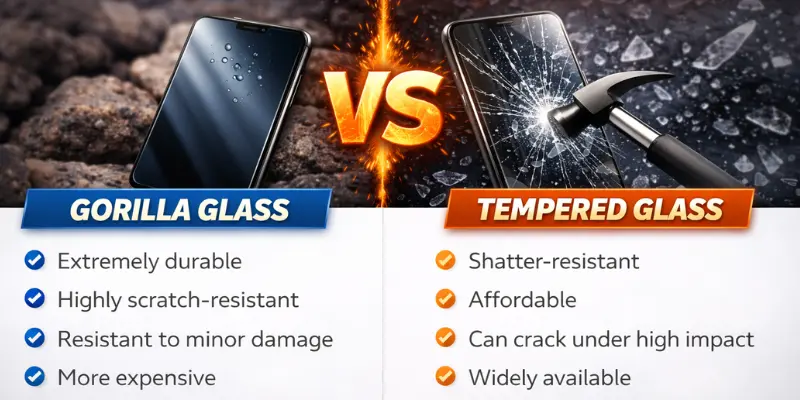
Here is a comparison table for a quick overview:
| Feature | Gorilla Glass | Tempered Glass |
|---|---|---|
| What it is | A specially made tough glass used as the phone’s original screen glass | A separate protective glass layer placed on top of the phone screen |
| Where it is used | Built into smartphones, tablets, and some other devices | Used as a screen protector for phones, tablets, and smartwatches |
| Strength type | Designed for built-in durability, scratch resistance, and better daily performance | Designed to absorb impact as an extra protective layer |
| Scratch resistance | Good scratch resistance for daily use | Good scratch resistance, but quality can vary by brand |
| Drop protection | Helps the phone screen survive small drops and bumps | Adds extra protection and may crack first to protect the original screen |
| Thickness | Usually thinner because it is part of the device | Usually thicker because it is added on top of the screen |
| Touch sensitivity | Excellent touch response because it is the original screen glass | Usually smooth, but low-quality protectors may reduce touch response slightly |
| Cost | Comes with the phone, but screen repair can be expensive | Usually low-cost and easier to buy |
| Replaceability | Not easy to replace because it is part of the phone display | Easy to replace when damaged |
| Best for | Users who want built-in strength and a smooth screen experience | Users who want extra protection and lower replacement cost |
Now, let’s explore the differences in detail.
1. How They Are Used
The biggest difference between Gorilla Glass and tempered glass is how they are used. Gorilla Glass is usually built into the phone as part of the original display. It is the main glass layer that comes with the device when you buy it.
Tempered glass is different. It is usually an extra screen protector that you place on top of the phone’s original screen. So, in most cases, you are not choosing one instead of the other. Gorilla Glass protects the phone from the start, while tempered glass adds another layer of safety.
2. Scratch Resistance
Gorilla Glass is made to resist daily scratches better than normal glass. It helps protect the screen from small marks caused by normal use, such as light rubbing inside a pocket or bag.
Tempered glass also gives good scratch protection, but its quality can change from one brand to another. In daily use, a good tempered glass protector can help keep the original screen safe from scratches caused by keys, coins, or rough contact. This means Gorilla Glass offers built-in scratch resistance, while tempered glass adds extra scratch protection on top.
3. Drop Protection
Gorilla Glass is designed to make smartphone screens stronger during daily use and small accidental drops. It can help reduce damage, but it is not impossible to break. A hard fall on the wrong surface can still crack the screen.
Tempered glass helps by acting like a shock-absorbing outer layer. In many cases, the tempered glass protector may crack first while the original phone screen stays safe underneath. This is why many people use tempered glass even when their phone already has Gorilla Glass. It gives one more layer of protection during drops and impacts.
4. Thickness and Screen Feel
Gorilla Glass is part of the phone, so it keeps the screen slim, smooth, and natural to use. The touch response usually feels better because it is the original display surface. It also keeps the screen looking clear and bright.
Tempered glass adds a little extra thickness because it sits on top of the display. A good-quality protector still feels smooth, but some low-quality options may slightly affect touch feel, edge smoothness, or screen clarity. So if you want the most natural screen experience, Gorilla Glass feels better, while tempered glass adds more physical protection.
5. Cost and Replacement
Gorilla Glass comes with the phone, so you do not buy it separately. But if the original screen breaks, repairing or replacing it can be expensive because it is part of the display.
Tempered glass is much cheaper and easier to replace. If it cracks, you can remove it and install a new one without spending too much money. This makes tempered glass a smart choice for users who want low-cost protection and easier replacement after damage.
6. Durability in Daily Use
In daily life, both Gorilla Glass and tempered glass are useful in different ways. Gorilla Glass helps the screen handle normal wear, light scratches, and regular phone use. It is good for everyday tasks like calling, messaging, watching videos, and browsing.
Tempered glass becomes more useful when your phone faces rougher conditions. For example, if you keep your phone with keys or coins, carry it in a crowded bag, travel often, give it to kids, or use it at work, a tempered glass protector can give extra safety. It helps reduce the chance of direct damage to the original screen.
7. Installation and Maintenance
Gorilla Glass does not need installation because it is already built into the phone. You simply use the phone as it is. Its care is also simple. You just need to keep the screen clean and avoid rough handling.
Tempered glass needs to be installed carefully on top of the screen. If it is not placed properly, it may trap dust or air bubbles. It also needs more attention over time because once it cracks or lifts from the edges, it should be replaced. So Gorilla Glass is easier to manage, while tempered glass needs proper fitting and occasional replacement.
Which One Is Better for Your Phone?
Want to know which glass is better for you according to different occasions? Here are some key points to remember for choosing the best glass for your phone.
Gorilla Glass Is Better If…
- You want built-in protection that comes with the phone
- You like the original screen feel
- You want a smooth and clear display
- You do not want an extra layer on the screen
- You prefer a slim phone design
- You want a more natural touch experience
Tempered Glass Is Better If…
- You want extra screen protection
- You drop your phone often
- You keep your phone in a bag or pocket with other items
- You want protection from scratches and minor cracks
- You want a cheaper replacement option
- You want to reduce the risk of costly screen repair
Conclusion
So guys, it’s time to wrap up! In this article, we discussed Gorilla Glass vs tempered glass in simple and easy words. In my opinion, Gorilla Glass is better as the phone’s built-in screen protection because it keeps the display smooth, clear, and strong for daily use.
But if you want extra safety and want to lower the risk of screen damage, tempered glass is also a smart choice. I hope this article helped you understand the difference clearly.
Please leave a comment below and tell me which one you would choose for your phone.
Frequently Asked Questions (FAQs)
Here are some common questions people ask about Gorilla Glass vs tempered glass to help you understand the difference more clearly.
Gorilla Glass is superior since it is an inbuilt screen glass of the phone whereas tempered glass is superior since it is an additional protection. Gorilla Glass is designed to be integrated into the phone display, therefore, offering smooth texture, sharp display, and durability that is acceptable on a daily basis. Glass is normally inserted later as a screen protector to provide added safety.
Yes, gorilla glass can be shielded by tempered glass. It is an additional screen over the original one on the phone, which minimizes scratches, marks, and small-time damage due to its everyday usage. In case the protector is destroyed, then it can be replaced without the necessity of replacing the original screen.
No, Gorilla Glass does not break easily, but it is not unbreakable. It is stronger than regular glass and designed to handle everyday use. However, a hard or unlucky drop can still cause it to crack or break.
No, a good tempered glass protector usually does not reduce touch sensitivity much. Most high-quality protectors are designed to keep the screen smooth and responsive. But cheap or badly installed tempered glass may affect touch feel slightly.
Tempered glass is better for extra scratch protection, but Gorilla Glass already gives good built-in scratch resistance. Gorilla Glass protects the original screen in daily use, while tempered glass adds another layer that takes scratches first. Using both gives better overall protection.
Yes, it is costly to replace Gorilla Glass since it is a component of the initial display of the phone. In case it malfunctions, the entire screen might require fixing or replacement. It is normally very expensive when compared to replacing a tempered glass protector.
Yes, tempered glass can crack while the original phone screen stays safe. That is one of the main reasons people use it. The protector takes the damage first, which can help save the actual display underneath.




- Be Respectful
- Stay Relevant
- Stay Positive
- True Feedback
- Encourage Discussion
- Avoid Spamming
- No Fake News
- Don't Copy-Paste
- No Personal Attacks
- Be Respectful
- Stay Relevant
- Stay Positive
- True Feedback
- Encourage Discussion
- Avoid Spamming
- No Fake News
- Don't Copy-Paste
- No Personal Attacks
