Advantages and Disadvantages of Satellite Phones
Published: 6 Dec 2025
Imagine being miles away from the nearest cell tower, in the middle of the forest, or on a remote business trip. In those situations, staying connected becomes crucial. This is where satellite phones come into play. But are they really worth it?
In this article, we’ll explain the pros and cons of satellite phones in detail, helping you decide if they’re the right tool for your needs. So, let’s dive in.
What Are Satellite Phones?
Before we get into the pros and cons, let’s first understand what satellite phones are. Unlike regular mobile phones that rely on ground-based cell towers, satellite phones connect to satellites orbiting Earth. These phones are designed to work in remote areas where traditional mobile networks don’t reach. Whether you’re climbing mountains, working offshore, or preparing for an emergency, satellite phones ensure you can always stay in touch.
Pros of Satellite Phones
Satellite phones provide unique advantages in remote areas where regular phones can’t connect. Let’s take a look at the main benefits
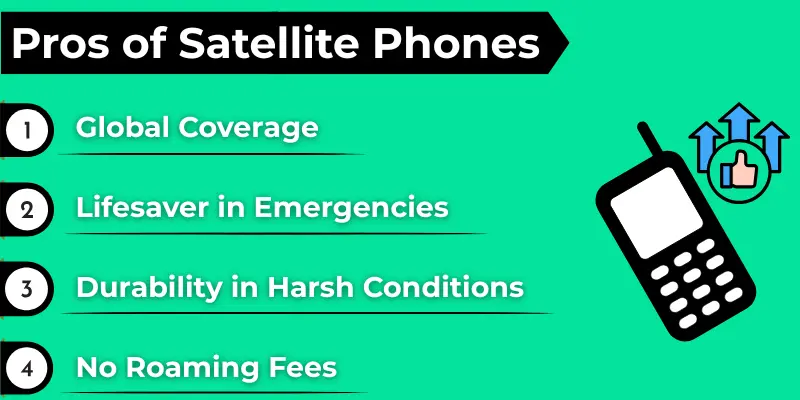
1. Global Coverage
One of the biggest advantages of satellite phones is their ability to work almost anywhere in the world. They keep you connected even in places where regular mobile networks don’t exist.
- Work almost anywhere in the world, even in remote regions with no cell network.
- Stay connected in the deep mountains, deserts, or at sea.
- Useful for travellers, adventurers, and business professionals working beyond the reach of cell towers.
2. Lifesaver in Emergencies
Satellite phones are built for situations where safety is critical. They allow you to call for help when no other communication option is available.
- Reliable during natural disasters, accidents, or power outages.
- Essential for hikers, climbers, and outdoor explorers.
- Used by emergency responders to coordinate rescue efforts.
- Allows instant SOS calls even in isolated areas.
3. Durability in Harsh Conditions
Unlike lightweight smartphones, satellite phones are designed to handle tough environments. They keep working in extreme weather and rugged locations.
- Resistant to water, dust, and shock.
- Operates in extreme heat or cold.
- Perfect for military personnel and field workers.
4. No Roaming Fees
Satellite phones don’t rely on local cell towers, so they avoid roaming charges. Your costs stay the same no matter where you are.
- Flat-rate pricing instead of changing roaming fees.
- Great for frequent international travellers.
- Saves money for businesses with teams working abroad.
5. Secure Communication
Satellite phones use strong encryption, making calls more secure than many mobile networks. This adds an extra layer of safety for sensitive conversations.
- Prevents unauthorized listening or network interception
- Trusted by governments, the military, and corporations.
- Useful for professionals handling sensitive data.
Cons of Satellite Phones
While satellite phones are highly reliable in remote areas, they also come with certain drawbacks that are important to consider.
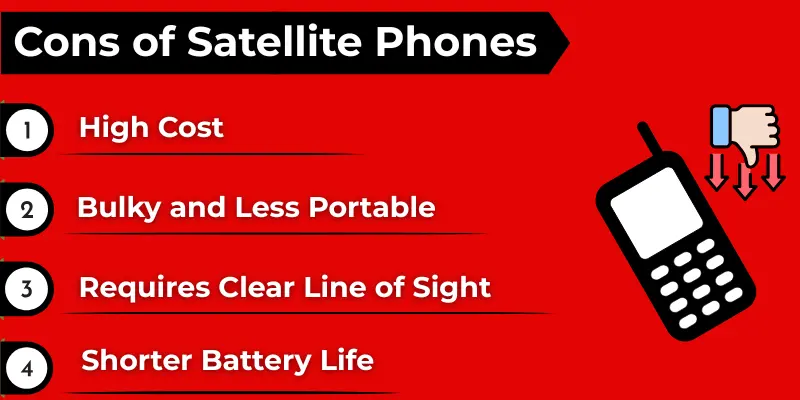
1. High Cost
One of the main drawbacks of satellite phones is their price. Both the device and the monthly plans are expensive compared to regular mobile phones.
- Devices can cost hundreds of dollars upfront.
- Service plans range from $30 to $150 per month.
- Additional fees may apply for long calls or heavy use.
- Replacement parts and accessories are more expensive than smartphones.
2. Limited Features
Satellite phones are designed for communication, not entertainment. They don’t come with the advanced features of modern smartphones.
- No high-speed internet or app store.
- Texting options are often limited.
- Primarily focused on calls and emergency messaging.
3. Bulky and Less Portable
Most satellite phones are larger and heavier than normal smartphones. This makes them less convenient to carry around on a daily basis.
- Bulkier in design with larger antennas.
- Not pocket-friendly like modern phones.
- They can feel outdated compared to slim smartphones
4. Shorter Battery Life
Battery performance is another concern with satellite phones. They don’t last as long as modern smartphones, especially during heavy use.
- Frequent recharging is required during long trips.
- Long calls drain the battery quickly.
- Battery performance drops in extreme weather.
- Carrying spare batteries or a portable charger is almost a must.
5. Requires Clear Line of Sight
Satellite phones need a clear view of the sky to work properly. Trees, tall buildings, or indoor spaces can block signals, making them less reliable in crowded cities or dense forests.
- Weak or no service indoors without an external antenna.
- Struggles in forests, valleys, or areas with large buildings.
- Constant movement (like in a car or train) can disrupt calls.
- Takes longer to connect compared to cell phones.
When Should You Consider a Satellite Phone?
Satellite phones are a great choice for specific use cases. If you’re a remote worker, adventurer, or someone who spends time in isolated areas, a satellite phone can provide peace of mind. Here are some situations where a satellite phone might be essential:
- Traveling in remote regions with no cell coverage, such as mountains, deserts, or isolated islands.
- Emergency preparedness for natural disasters (such as earthquakes, hurricanes, and floods) or unexpected accidents.
- Military or security operations where secure and private communication is important.
- People working at sea on oil rigs, ships, or other marine operations.
- Business professionals managing teams at remote construction, mining, or energy sites.
- Researchers and scientists working in polar regions, jungles, or remote field stations.
Conclusion
So guys, in this article, we’ve covered the advantages and disadvantages of satellite phones in detail. In my opinion, a satellite phone is worth considering if you regularly travel to remote areas or need secure communication for work. While they may not suit everyone due to their cost and limited features, they can be a real lifesaver in the right situations.
If you think a satellite phone could benefit your lifestyle or profession, start comparing models and plans today to find the one that best suits your needs.
Frequently Asked Questions (FAQs)
Here are the answers to some common questions about the benefits and drawbacks of satellite phones:
Satellite phones are worth it if you travel often to remote areas or work where mobile networks don’t reach. They provide reliable communication during emergencies. However, for everyday use, they may be too costly and limited compared to smartphones.
Satellite phones work almost anywhere as long as you have a clear view of the sky. They may struggle indoors, in dense forests, or in cities with tall buildings. For best results, use them in open outdoor areas.
Satellite phones usually cost a few hundred dollars to buy. Monthly service plans range from $30 to $150, depending on usage. Extra fees may apply for long calls or international numbers.
Most satellite phones don’t work well indoors because they need a clear signal from the sky. You may need to step outside or use an external antenna. Buildings, trees, and mountains can block the signal.
No, satellite phones are not allowed for personal use during commercial flights. They can interfere with onboard systems. However, they can be used on private aircraft with special equipment and permissions.

- Be Respectful
- Stay Relevant
- Stay Positive
- True Feedback
- Encourage Discussion
- Avoid Spamming
- No Fake News
- Don't Copy-Paste
- No Personal Attacks
- Be Respectful
- Stay Relevant
- Stay Positive
- True Feedback
- Encourage Discussion
- Avoid Spamming
- No Fake News
- Don't Copy-Paste
- No Personal Attacks
