Feature Phone vs Smartphone: How to Decide the Right One
Published: 19 Feb 2026
Mobile phones have become an essential part of our daily lives, whether for communicating with family and friends or for business. However, when it comes to selecting between a feature phone and a smartphone, many beginners may become puzzled.
Are two of them identical in nature? Not at all! In reality, feature phones and smartphones serve different purposes and offer distinct services. Let’s break it down.
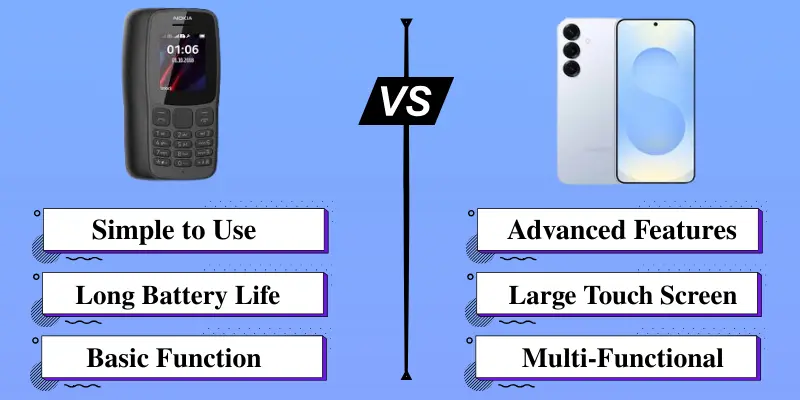
Key Differences Between Feature Phones and Smartphones
Understanding the difference between Feature Phones and Smartphones is important for knowing how a mobile phone works. Both are types of phones, but they do very different jobs.
Here is a comparison table for a quick overview:
| Feature | Feature Phone | Smartphone |
|---|---|---|
| Purpose | Basic communication (calls & texts) | Multi-functional (calling, internet, apps, etc.) |
| User Interaction | Simple buttons and screen | Touchscreen and interactive features |
| Installation | Pre-installed, no extra apps | Download apps from stores like Google Play/Apple |
| Examples | Nokia 1100, Samsung GT-S5230 | iPhone 17, Samsung Galaxy S25 |
| Dependency | Works independently | Requires system software (OS) to function |
| Function | Basic tasks only (calls, SMS, radio) | Multiple tasks (apps, gaming, browsing, etc.) |
| Startup | Starts with the power button press | Auto-starts with the operating system |
| Memory Usage | Minimal | Requires large memory (for apps, multimedia, etc.) |
| Updates | Rarely updated | Frequent updates (OS, apps) |
| Price | Affordable and budget-friendly | Generally more expensive |
Now, let’s discuss each difference in detail.
1. Purpose
Devices perform many purposes depending on the user’s needs. The key distinction is what they are designed to tackle.
- Feature Phone: Feature phones are designed to do basic functions such as making calls, sending texts, and occasionally playing basic games. Their primary goal is simplicity and ease of use, making them ideal for people who only require a communication device.
- Smartphone: Smartphones are portable electronic devices that provide a variety of functions such as internet browsing, social media, gaming, multimedia playing, and more. They function as mini-computers that meet a variety of requirements, from productivity to enjoyment.
2. User Interaction
One big difference is how the user interacts with the gadget. It helps describe the experience and how easy it is to use.
- Feature Phone: Users interact with feature phones through physical buttons and a small screen. The interface is easy to understand, with users interacting by pushing keys to make calls, send texts, or browse basic menus.
- Smartphone: Smartphones rely on touchscreen displays. Users navigate the gadget by tapping, swiping, and scrolling, creating a dynamic and interactive experience. This provides simpler access to apps, websites, and multimedia content.
3. Installation
Some devices come pre-installed with the necessary software, while others require the user to install additional software.
- Feature Phone: Feature phones include all necessary software pre-installed. Users do not need to install anything because the phone is already set up for basic operations such as calling and texting.
- Smartphone: To use different features on a smartphone, people download apps from stores like Google Play or the Apple App Store. This way, they can choose apps for things like entertainment or getting work done.
4. Examples
It’s easier to tell the difference between feature phones and smartphones when you see the examples of each.
- Feature Phone: Examples of feature phones include models like the Nokia 1100 and Samsung GT-S5230.
- Smartphone: Examples of smartphones include devices like the iPhone, Samsung Galaxy, and Google Pixel.
5. Dependency
Some gadgets can operate alone, while others require a system or software to function. This difference determines how each device functions.
- Feature Phone: When switched on, feature phones can operate independently. They don’t need any additional software or operating systems to accomplish their essential operations.
- Smartphone: Smartphones use an operating system (such as Android or iOS) to function. The operating system monitors everything from app installations to system upgrades, making smartphones extremely reliant on software.
6. Function
A device’s functions define what it can perform and how well it meets the needs of its users. Here’s how feature phones and smartphones differ in this regard.
- Feature Phone: Feature phones are designed for simple communication functions like making calls, texting, and occasionally using a camera or music player. They are designed for simplicity and include basic functions.
- Smartphone: Smartphones can perform various tasks, such as browsing the internet, managing emails, running apps, playing premium games, and streaming video. They are unique devices that combine functionality and entertainment.
7. Startup
The time it takes for a technology to be ready for use after turning it on reflects its built-in complexity.
- Feature Phone: Feature phones start quickly. You press the power button, and they are ready to make calls or send texts almost instantly.
- Smartphone: Smartphones take a little longer to start. The operating system must first load before the phone can handle multitasking and a wide range of apps.
8. Memory Usage
Devices use different amounts of memory depending on their functions and features. The memory usage directly impacts how they perform.
- Feature Phone: Feature phones use little memory because they only store basic data like contacts, messages, and some small media files.
- Smartphone: Smartphones require a considerable amount of memory to store applications, big media assets (pictures and videos), and the operating system. Smartphones require bigger storage capabilities to support their enhanced features.
9. Updates
Software updates are essential for keeping devices running smoothly. However, the frequency and importance of upgrades differ between feature phones and smartphones.
- Feature Phone: Feature phones don’t require frequent updates. When updates occur in feature phones, they are mostly for minor fixes or security patches.
- Smartphone: Smartphones receive regular updates to their operating systems and apps. These updates add new features, improve performance, and enhance security, making them important for keeping a smartphone working.
10. Price
Price is one of the most important factors when choosing between a feature phone and a smartphone. The cost difference between the two devices can be significant.
- Feature Phone: Feature phones are generally affordable and budget-friendly. They focus on basic functions, which keeps their price lower compared to modern devices.
- Smartphone: Smartphones are usually more expensive due to their advanced features, powerful hardware, and app support. Prices vary depending on the brand, specifications, and technology.
Which One Should You Choose?
The choice between a feature phone and a smartphone depends completely on your personal needs:
- If you want a simple, easy-to-use phone for calling and messaging, and you don’t mind missing modern features, a feature phone is the way to go.
- A Smartphone is better if you want a phone that can do everything, from checking emails and managing your calendar to streaming video and using social media.
Frequently Asked Questions (FAQs)
Here are the answers to some common questions about feature phone vs smartphone :
The main difference is that feature phones are designed for basic tasks such as calling, texting and simple media playback. At the same time, smartphones are unique devices that offer internet browsing, apps, gaming,and image features.
Most feature phones do not have full internet access. They may have basic features like WAP for limited browsing, but they are not equipped for modern web browsing or smartphone apps.
A feature phone is often better for older people due to its simplicity. It includes simple buttons and a basic design, with a focus on basic communication functions such as calling and texting.
Yes, smartphones are generally much more expensive than feature phones. Smartphones offer advanced features such as internet access, high-quality cameras, and App support, which makes them pricier.
Feature phones weren’t designed for social media use. They have limited internet access, so you cannot install apps like Facebook or Instagram.
Due to their simple tasks and low power use, feature phones usually last much longer on a single charge, sometimes up to a few days. Smartphones usually need to be charged every day or two, depending on their usage.
Yes, Snake and Tetris are simple games to play on a feature phone. However, these games are not as complex or graphically intensive as those available on smartphones.
No, feature phones do not have the same app installation options as smartphones. They come with pre-installed software for basic functions and have relatively few modification options.
Conclusion
Your choice between a feature phone and a smartphone ultimately depends on your needs. If you only need a device for basic communication and prefer something simple without advanced features, a feature phone can be a great option.
On the other hand, if you want a device that allows you to browse the internet, use apps, and enjoy games or multimedia, a smartphone is the better choice.
Both types of phones have their own advantages. The right decision comes down to your personal preferences, usage, and budget.




- Be Respectful
- Stay Relevant
- Stay Positive
- True Feedback
- Encourage Discussion
- Avoid Spamming
- No Fake News
- Don't Copy-Paste
- No Personal Attacks
- Be Respectful
- Stay Relevant
- Stay Positive
- True Feedback
- Encourage Discussion
- Avoid Spamming
- No Fake News
- Don't Copy-Paste
- No Personal Attacks
