Understanding the Difference Between Telephone & Mobile Phone
Published: 26 Oct 2025
In today’s world, the terms “telephone” and “mobile phone” are often used interchangeably, but they represent two distinct communication technologies. While both provide voice communication but they differ in terms of technology, features, usage, and benefits.
Whether you’re upgrading your landline or exploring the evolution of communication, understanding the difference between telephone and mobile phone will help you make informed decisions for personal or professional use. So, let’s dive in and explore these two technologies in detail.
What is a Telephone?
A telephone, traditionally known as a landline, is a device that allows voice communication over a physical connection to a network. This network is typically wired and provides the user with a stable connection to make and receive calls. The technology behind landlines dates back to the late 19th century, with Alexander Graham Bell credited as the inventor of the first practical telephone in 1876.

Landline phones, at their core, rely on a network of physical wires to transmit electrical signals carrying voice data. These telephones are stationary and must be connected to a land-based telephone network, meaning users can only access them from one fixed location. Over time, the analog signal used in traditional landlines was replaced with digital signals, improving the quality of calls.
| Advantages of Telephone: |
|---|
|
| Disadvantages of Telephone: |
|---|
|
What is a Mobile Phone?
A mobile phone, also known as a cell phone, is a portable communication device that allows users to make and receive calls wirelessly. Unlike landlines, mobile phones communicate through cellular networks, which are made up of base stations (large towers or antennas) that provide coverage over a wide area.
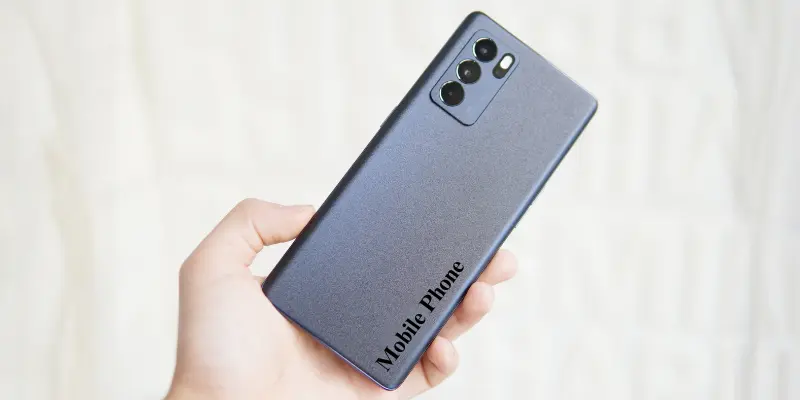
Mobile phones, which were first introduced in the 1980s, have evolved from basic devices used only for voice calls to powerful smartphones that offer a wide range of functionalities, including internet browsing, text messaging, and access to various apps.
Mobile phones connect to the internet through Wi-Fi or cellular networks (like 4G and 5G) and allow users to communicate without being limited to a certain place.
| Advantages of Mobile Phones: |
|---|
|
| Disadvantages of Mobile Phones: |
|---|
|
Mobile Phone Vs Telephone: Key Differences
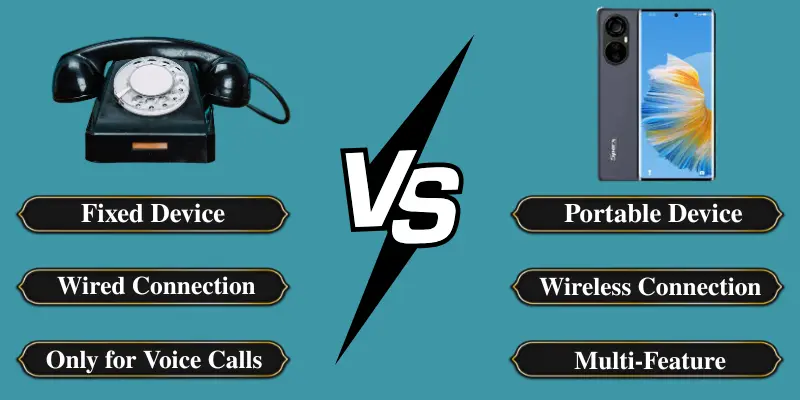
In the debate between telephones vs modern mobile phones, there are several key differences. Let’s compare them based on technology, portability, functionality, accessibility, and cost.
| Feature | Telephone (Landline) | Mobile Phone |
|---|---|---|
| Technology | Wired connections for stable voice communication | Wireless networks and cellular signals for calls and internet access |
| Portability | Stationary, bound to one location | Portable, allows communication from anywhere |
| Functionality | Designed for voice communication only | Multifunctional (calls, texting, internet, apps, etc.) |
| Accessibility | Limited to specific locations (home/office) | Can be used anywhere with network coverage |
| Cost | Lower maintenance costs | Higher costs due to data plans and hardware |
When to Use a Landline (Telephone) vs Mobile Phone?
Choosing between a landline and a mobile phone largely depends on your communication needs and lifestyle.
- For Stability and Security: If you prioritize a reliable, fixed connection and need a phone primarily for home or office use, a landline telephone might be ideal. It offers stability without worrying about battery life or signal dropouts.
- For Portability and Flexibility: If you’re always on the move, a mobile phone is a better choice. It provides the flexibility to stay connected wherever you are, whether at work, on vacation, or during travel.
Conclusion
So guys, in this article, we’ve covered the differences between mobile and telephone in detail. Based on the differences we’ve discussed, I personally recommend opting for a mobile phone if you value portability, multifunctionality, and staying connected on the go. However, Landlines can still serve well for those who seek simple, reliable communication without the added distractions.
Which one suits your lifestyle better? Drop your thoughts in the comments below, and if you found this article helpful, be sure to share it with your friends!
Frequently Asked Questions (FAQs)
Here are the answers to some common questions about the difference between mobile and telephone :
Yes, a cell phone is a type of telephone. While both are used for voice communication, a cell phone is more advanced because it operates wirelessly and offers additional features like internet access and texting. It’s a modern version of the traditional telephone.
Landlines tend to be more secure because they are less vulnerable to hacking compared to mobile phones. Mobile phones, on the other hand, can be targeted by malware or tracking apps. However, both can be secure with proper precautions.
Landlines are still useful in certain situations, especially for people who prioritize stable, uninterrupted service. They are often more reliable during power outages and less prone to dropped calls.
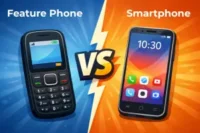
A regular phone (often called a feature phone) is primarily designed for voice calls and text messaging, while a smartphone offers advanced features such as internet browsing, apps, and multimedia functions. Smartphones have operating systems like iOS or Android, allowing users to install a variety of apps, unlike regular phones, which have limited functionality.



- Be Respectful
- Stay Relevant
- Stay Positive
- True Feedback
- Encourage Discussion
- Avoid Spamming
- No Fake News
- Don't Copy-Paste
- No Personal Attacks
- Be Respectful
- Stay Relevant
- Stay Positive
- True Feedback
- Encourage Discussion
- Avoid Spamming
- No Fake News
- Don't Copy-Paste
- No Personal Attacks
